Moving to Valencia Checklist: Paperwork in Order (2026)
https://settlevalencia.com/admin/moving-to-valencia-checklist/
Newly arrived in Valencia? Start with the padrón: everyone who lives in Spain must register on it. On a general-regime visa over six months, request the TIE within one month of entry; a digital nomad visa needs none. SIP registration carries no fee. A non-EU licence lasts at most six months after you acquire normal residence.
Also in: Deutsch
On this page
- The order of steps
- Before you leave: pick your visa route
- Sign the lease first
- Week 1: register on the padrón
- Weeks 1–4: NIE and TIE at the police station
- Week 1: can you open a bank account?
- First month: SIP card and doctor
- First month: electricity, water and internet
- Within six months: swap your driving licence
- Within the first year: tax residency
- If you work for yourself: autónomo and the Beckham regime
- Later: permanent residence and school places
- Step by step
- Common questions
The order of steps
Work through the steps in the order below; each links to its full guide.

Before you leave: pick your visa route
Your route decides which office you meet first, so pick it before you pack. Both routes below start at a Spanish consulate, not in Spain.
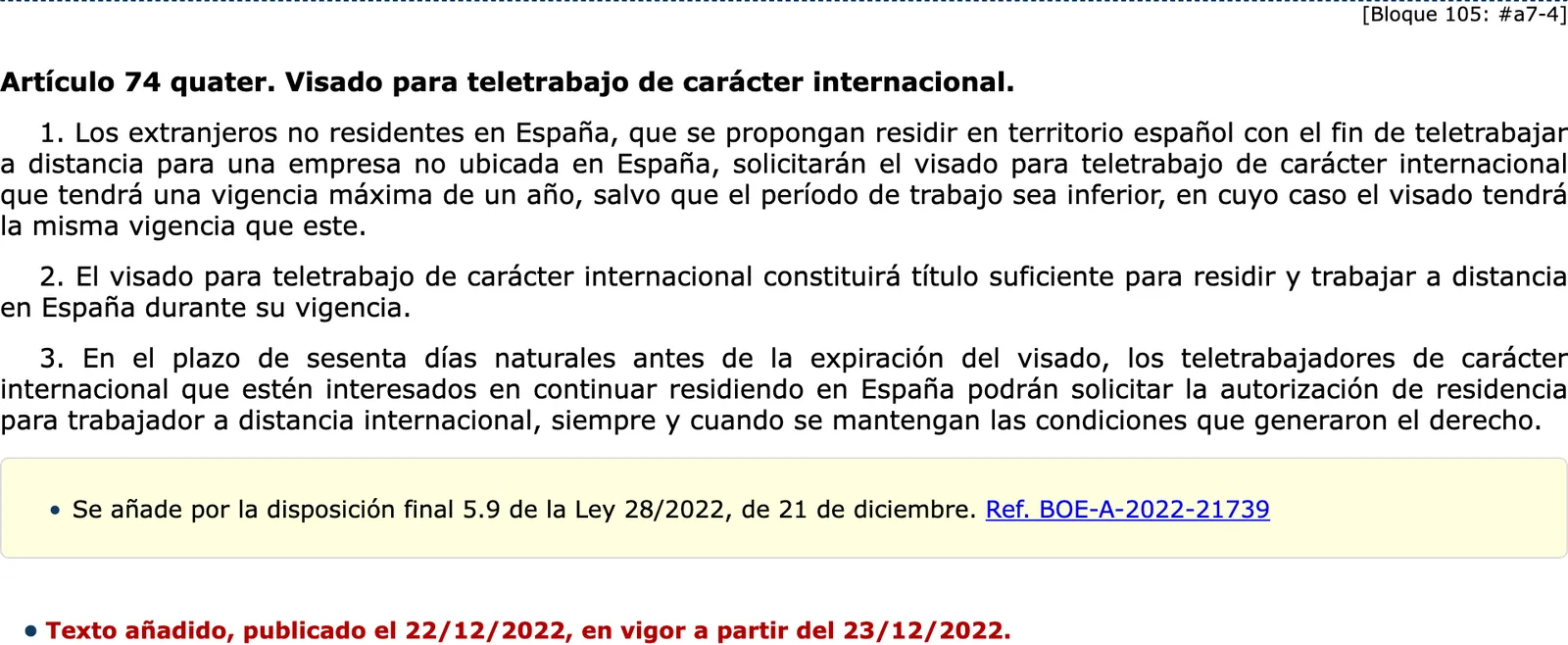
Do you work remotely for a company outside Spain?
The international teleworking residence covers a third-country national who works remotely for companies located outside Spain. An employee may work only for companies located outside Spain.
- A degree, or at least three years of professional experience.
- A company or group with real and continuous activity for at least one year.
- An employment relationship of at least the last three months.
- Monthly income of 200% of the SMI for the main applicant.
You cannot file the residence authorisation directly from abroad: apply for the teleworker visa at a Spanish consulate. The consulate resolves the visa within 10 working days, unless a Visa Code consultation applies.
Someone already lawfully in Spain may apply for the authorisation. It is resolved within twenty days or deemed granted. EU citizens are outside this route. The digital nomad visa guide has the full requirements.
Living on savings, not working
Non-lucrative residence covers foreigners authorised to reside in Spain without employment or professional activity.
- Monthly means of 400% of the IPREM for the main applicant.
- An extra 100% of the IPREM for each dependent family member.
- Health insurance. It must be health insurance, not travel insurance, and last the whole length of the visa.
- Foreign documents legalised or apostilled, and translated if not in Spanish.
The visa application includes the application for the residence authorisation, and both go to the Spanish consulate. Full requirements: non-lucrative visa guide.
Do you hold an EU passport?
No visa is needed. For stays under three months a valid passport or ID document is enough, and that time does not count towards residence. To live here longer, register as an EU citizen.
The registration certificate proves your entry in the Central Register of Foreigners if you will live in Spain for more than three months. It is for citizens of the EU, other EEA States or Switzerland.
- You have a right to reside beyond three months if you work in Spain as an employee or self-employed.
- Otherwise you need sufficient resources and health insurance covering all risks in Spain.
- No fixed euro amount applies to the means; your personal situation counts.
Apply in person at the foreigners office of the province where you will live or, failing that, the police station. Do it within three months of entering Spain. The form is EX18.
Bring a valid passport or national ID and proof that you meet the conditions. Add proof of payment of the Modelo 790 código 012 fee, which is €12.00. The certificate is issued immediately.
In València city the EU certificate is handled at the Comisaría de Bailén, C/ Bailen, 9. The certificate stays valid while you keep meeting a condition that gave you the right. To pick the right document for your case, use the NIE vs TIE guide.
Retiring on an EU pension? Next, the S1 guide for health registration.
Sign the lease first
Sign the lease before the padrón, because the town hall asks for the contract. A rented home needs a contract in force, signed by everyone named in it, with a duration of more than six months. A rent receipt or bank transfer from the last two months goes with it.
- Ask for the lease in writing: the tenant can require it.
- Refuse agency and contract-formalisation fees: they cannot be charged to the tenant.
- Refuse rent-default insurance: a landlord may not require it.
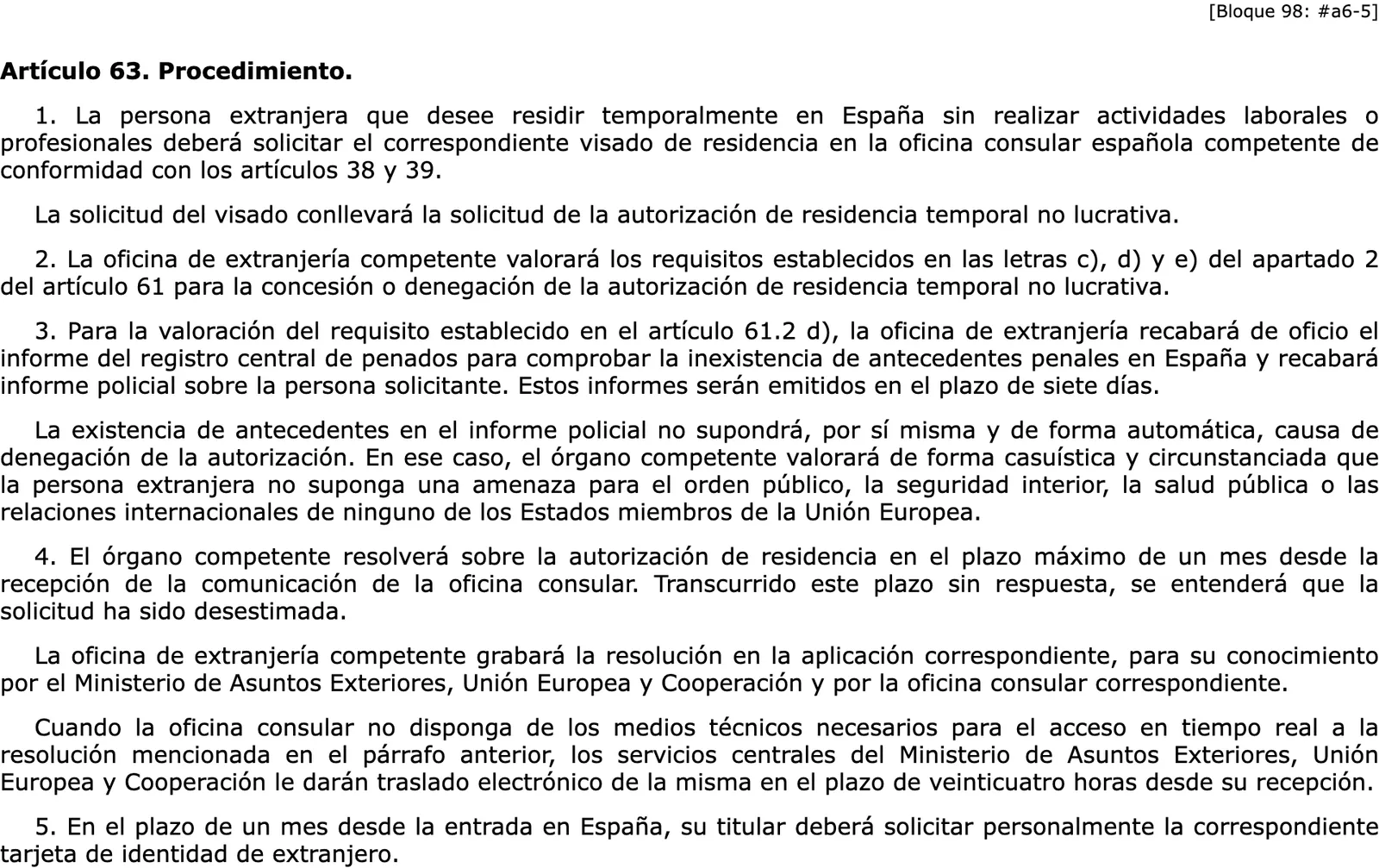
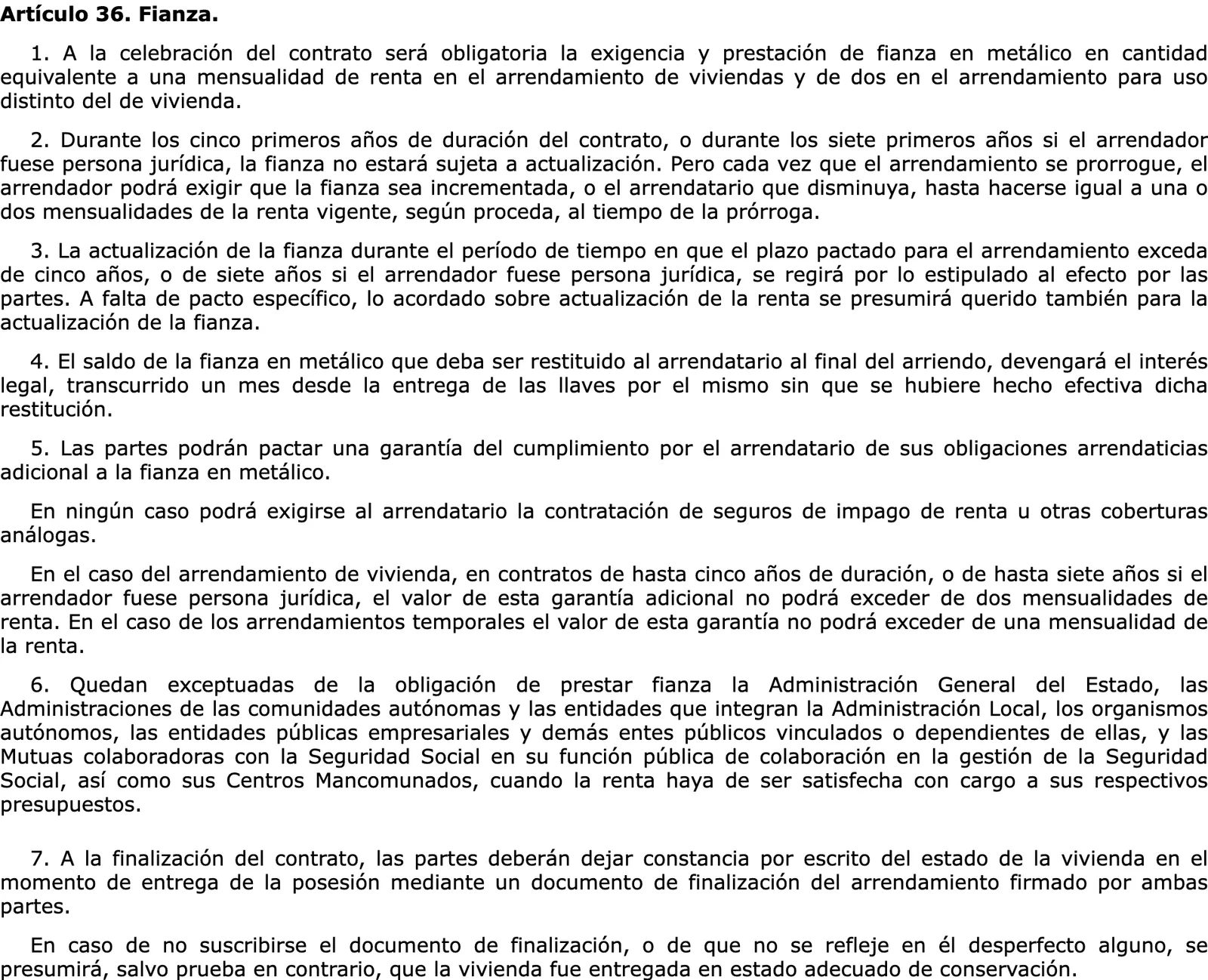
- Pay no more than one month’s rent in advance. The fianza equals one month’s rent for a housing lease.
- Check the deposit. In the Comunitat Valenciana the landlord, not the tenant, deposits the fianza with the Generalitat. The deadline is one month after signing.
- Ask whether it was lodged: email fianarren@gva.es with your ID and the lease.
Royal Decree-law 29/2026, published in the BOE on 7 October 2026, entered into force on 8 October 2026. Before you pay, use the rental guide and the fianza guide.
To choose where to live, use the neighbourhoods guide, the Russafa guide or the family neighbourhoods guide. Budget with the cost of living guide. Weighing another city? See Valencia vs Barcelona.
Week 1: register on the padrón
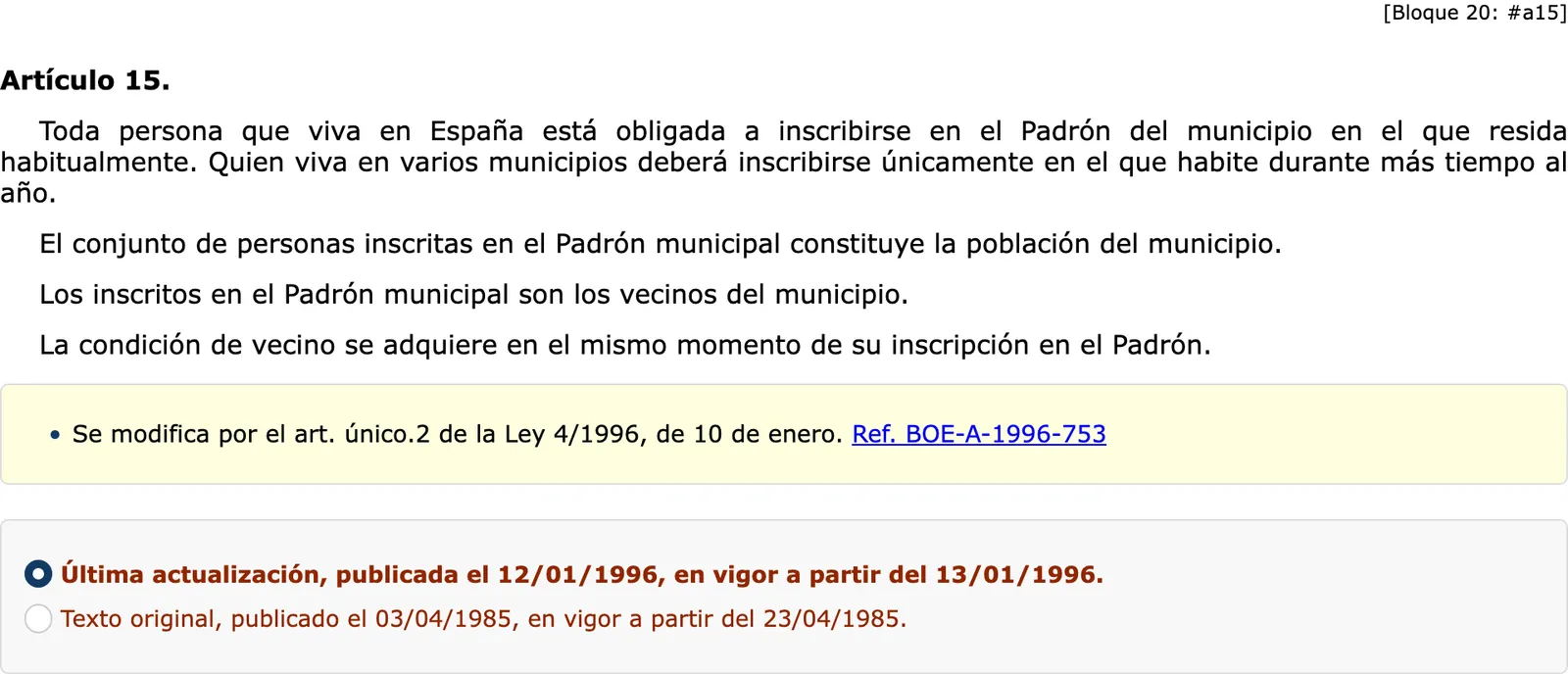
Register on the padrón of the municipality where you live. The law makes it a duty.
Toda persona que viva en España está obligada a inscribirse en el Padrón del municipio en el que resida habitualmente.
Every person who lives in Spain is obliged to register in the Padrón of the municipality where they habitually reside.
BOE · Ley 7/1985, art. 15
- Use the Ajuntament de València for a registration (alta) if you live in València and are not registered.
- Book a cita previa on the city website or by phone.
- Bring identity documents that are in force.
- Pay nothing: all padrón procedures at the Ajuntament are free.
An online request is not instant, because the town hall reviews the documents first. The maximum resolution period is 3 months.
A padrón registration does not prove legal residence in Spain. A non-EU national without a long-term residence authorisation renews it every two years. A certificado de empadronamiento proves your registration and justifies your address to other bodies. The empadronamiento guide has the full detail.
Weeks 1–4: NIE and TIE at the police station
Padrón done? Next come the police-station procedures, which book on the ICP website. The Oficina de Extranjería in Valencia province does not issue the NIE or the TIE. The cita previa guide explains both systems.
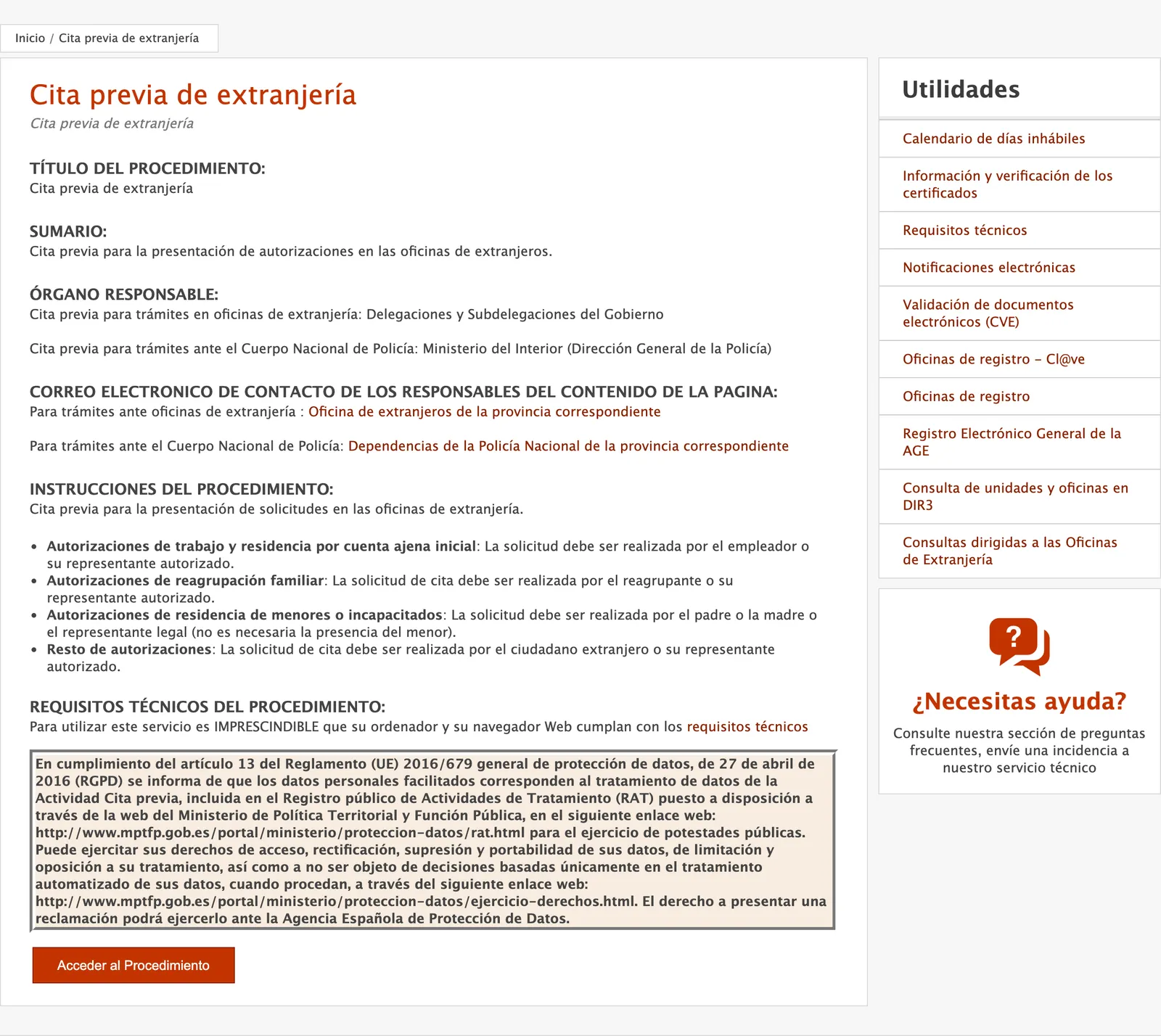
NIE
A NIE is the personal number given to foreigners with ties to Spain. It does not authorise residence in Spain.
- Fill in form EX15.
- Add proof of payment of the Modelo 790 código 012 fee. The fee for a NIE assigned at your request is €9.84.
- The request must be resolved within five days of entering the register.
Booking steps: NIE appointment guide.
TIE
The TIE comes next. The TIE identifies a foreigner and proves their legal situation in Spain. With a general-regime visa or authorisation for more than six months, apply in person within one month of entering Spain or of the authorisation being granted. A digital nomad visa authorises residence without a TIE; the card comes once your residence authorisation is granted for more than six months.
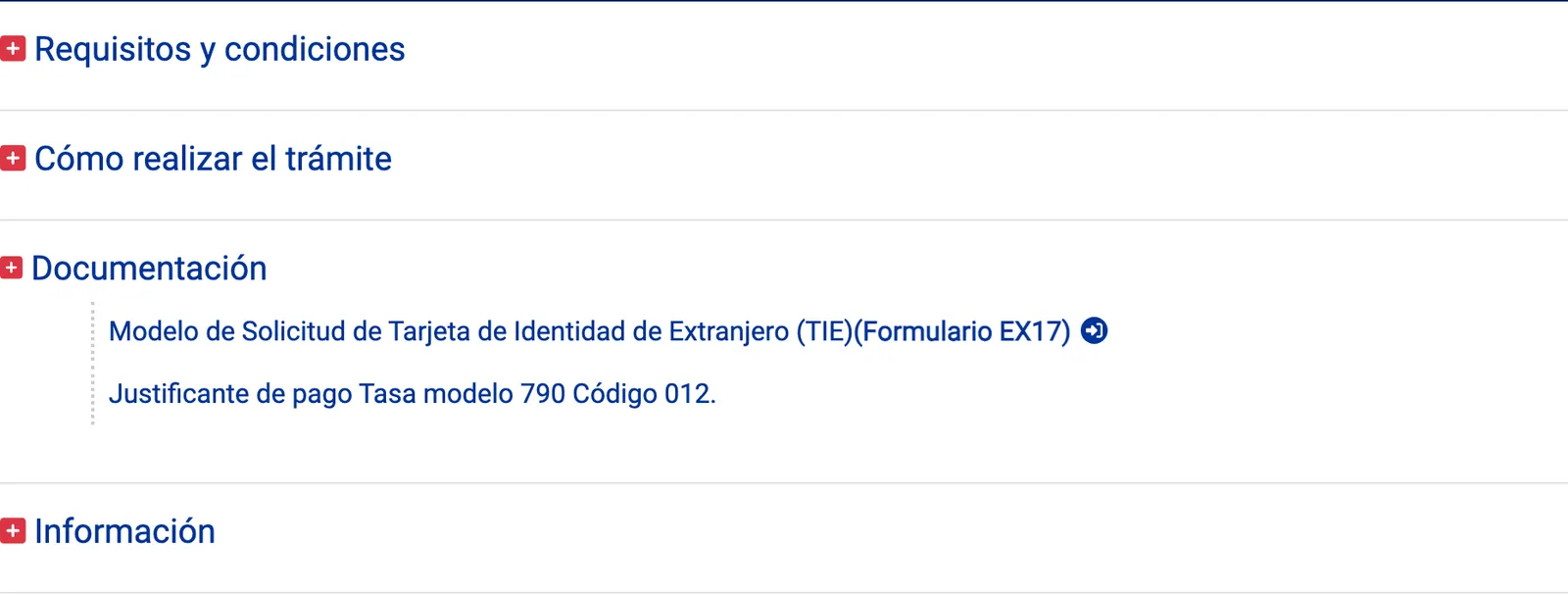
- Non-EU cards for people resident in València city are issued at the Comisaría de Patraix, C/ Dels Gremis, 6.
- Present your documents personally at the police station for your place of residence.
- The form is EX17, with proof of payment of the Modelo 790 código 012 fee.
- The fee for a first grant of temporary residence is €16.08.
- To collect the card, prove you are its addressee and have paid the fees.
A non-lucrative holder applies in person for the TIE within one month of entering Spain. When you move home, a TIE holder asks the competent police station for a duplicate, with the current padrón certificate. Full steps: TIE guide.
Week 1: can you open a bank account?
Yes, if you are legally resident in the EU: that gives you a right to a basic payment account. A bank may charge a single combined monthly fee of at most EUR 3 for the basic services.
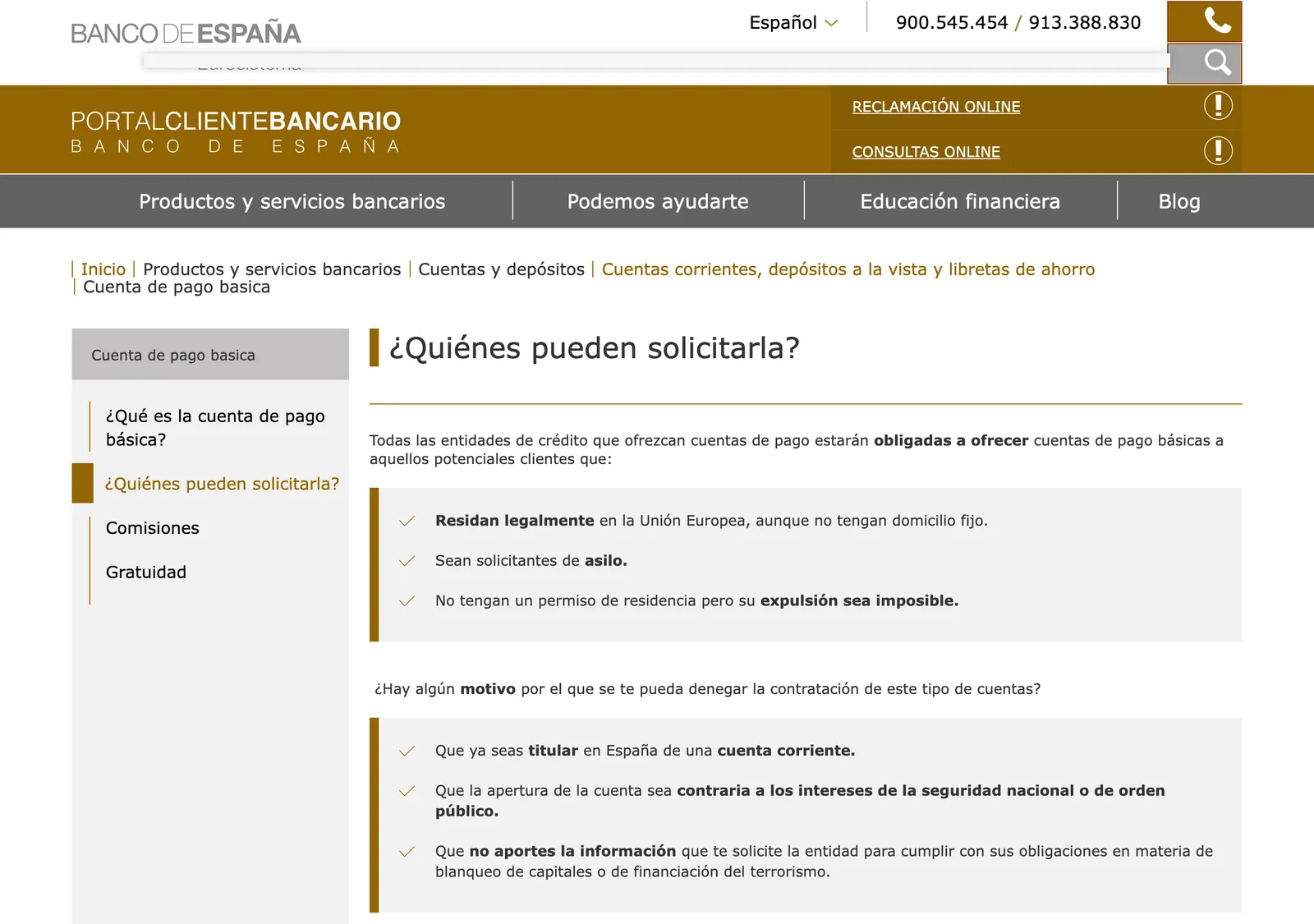
Bring a Residence Card, a TIE or a passport; EU and EEA citizens may use their official national identity document. The document must be valid when the bank relationship is established. A refusal must be notified in writing, with reasons, within ten working days of the complete application. Next: the bank account guide.
First month: SIP card and doctor
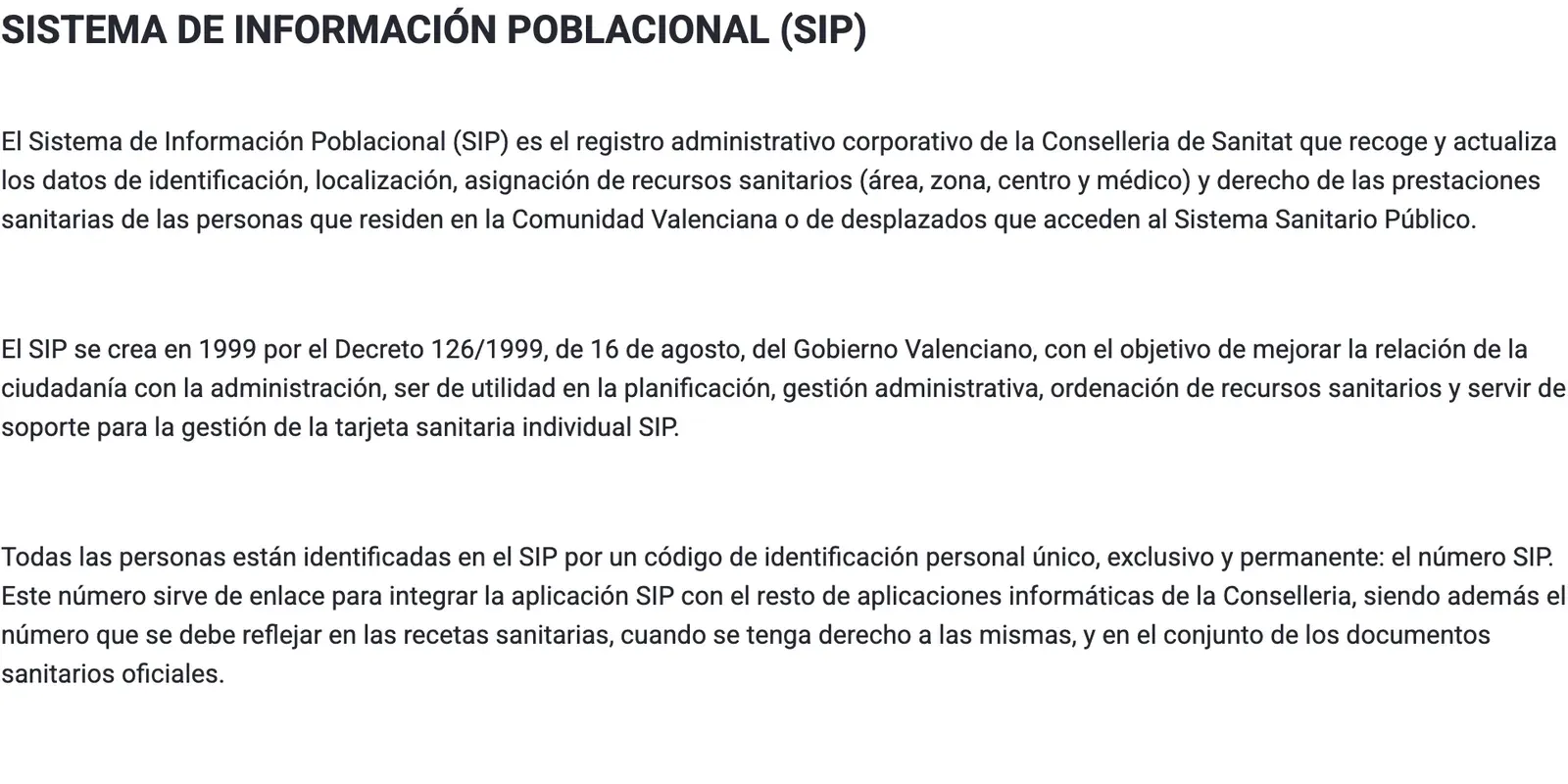
With the padrón done, SIP is next. SIP is Valencia’s public health card. Registration needs a habitual residence in a Valencian municipality, which requires being on its padrón. The procedure carries no fee.
- First-time applicants register online with a digital certificate or Cl@ve.
- Without them, go to the health centre nearest your home.
- After the online request, collect the individual health card or an inclusion document at the health centre for your place of residence.
- Show the card whenever you request benefits at public care centres and at pharmacies.
There is no separate GP registration step, because SIP holds your area, zone, centre and doctor. Book an appointment by phone at the centre number printed on the card, or on 96 183 90 00. Details: SIP guide and GP guide.
If you have no other public cover
The convenio especial is signed with the Generalitat by people who are not insured and meet three requirements. The first is effective residence in Spain for a continuous minimum period. The second is registration on the padrón of a Valencian municipality when applying.
The monthly fee is EUR 60 under 65 and EUR 157 from 65. The decision is notified within 30 days. Compare public and private care and see the convenio especial guide.
First month: electricity, water and internet
Costs for services measured by individual meters are in all cases the tenant’s. Ask the landlord for the supply details before you call anyone.
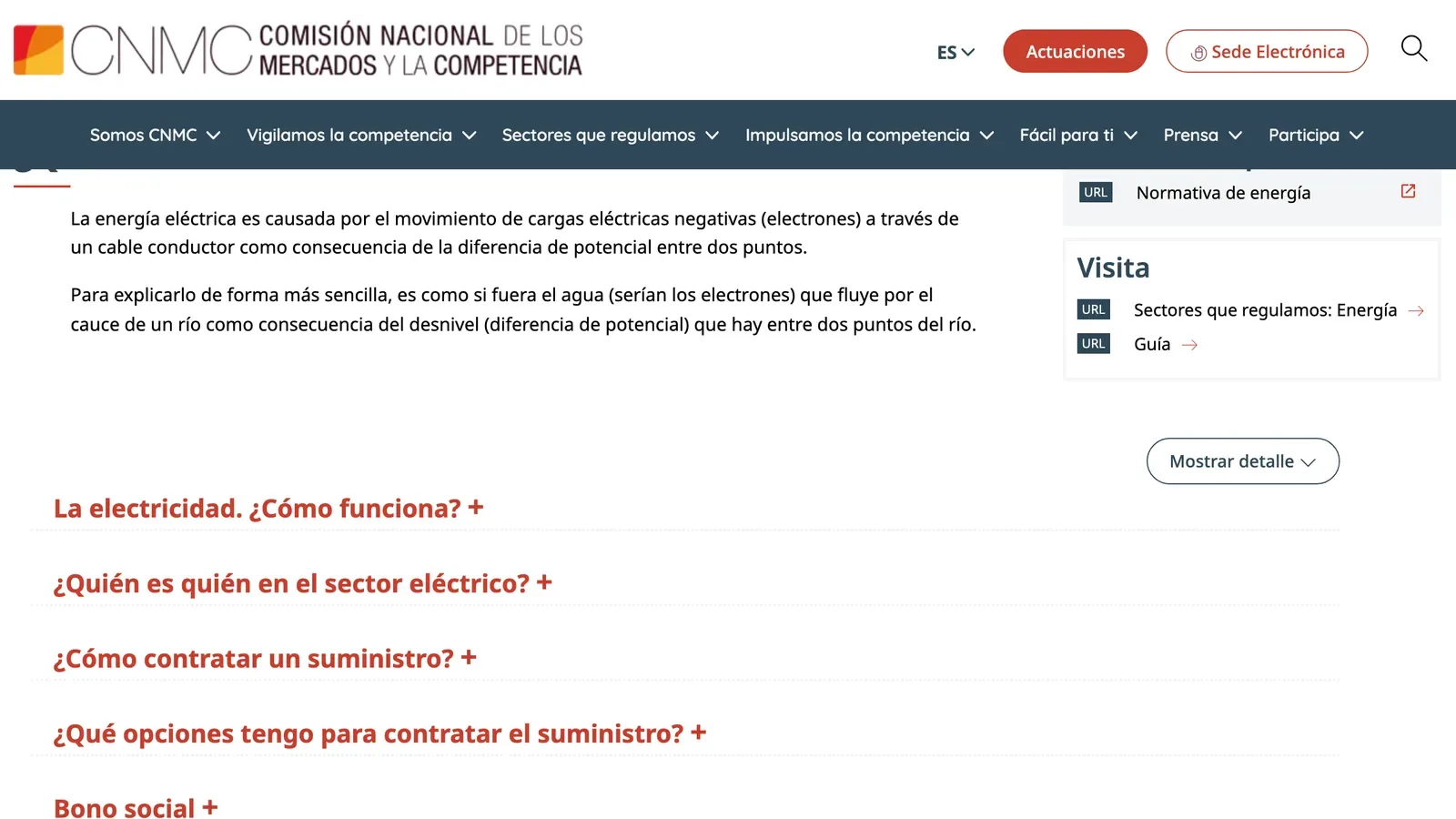
- Electricity needs the CUPS code of the supply point. The legal maximum to switch it on is 5 to 7 working days.
- Water: phone Emivasa on 96 386 06 00, use the virtual office or go to an office.
Full detail: utilities and internet guide.
Within six months: swap your driving licence
A foreign non-EU licence is valid for at most six months from when its holder acquires normal residence in Spain, unless a bilateral agreement sets another rule. Exchanging an EU or EEA licence requires no exam. Licences from other countries exchange only where an exchange agreement exists.
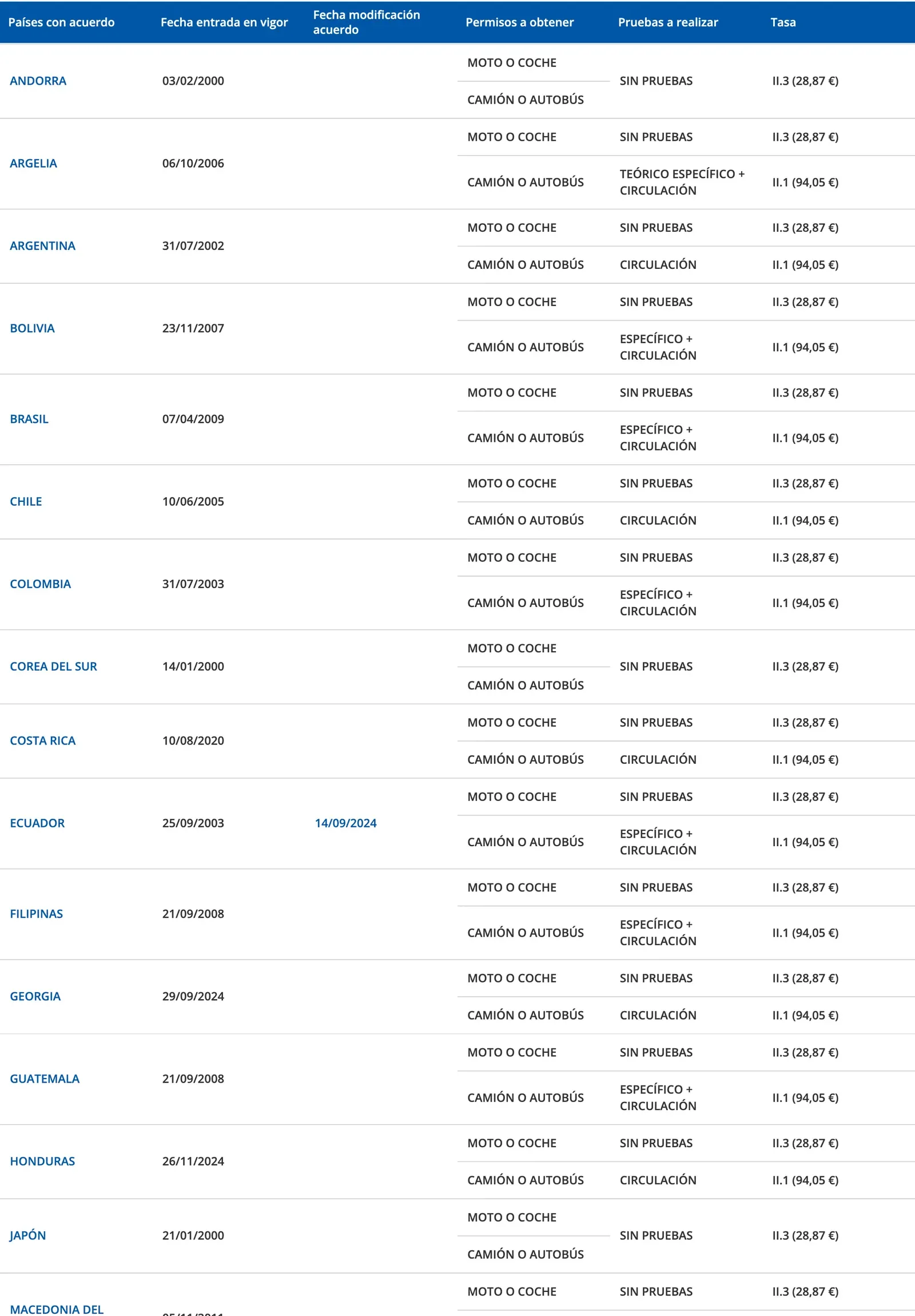
- Get a psychophysical fitness report from an authorised Centro de Reconocimiento de Conductores.
- Pay the fee for an EU or EEA exchange: tasa 2.3, €28.87.
- Book a cita previa and apply in person at a Jefatura or Traffic Office.
Steps in full: driving licence guide.
Within the first year: tax residency
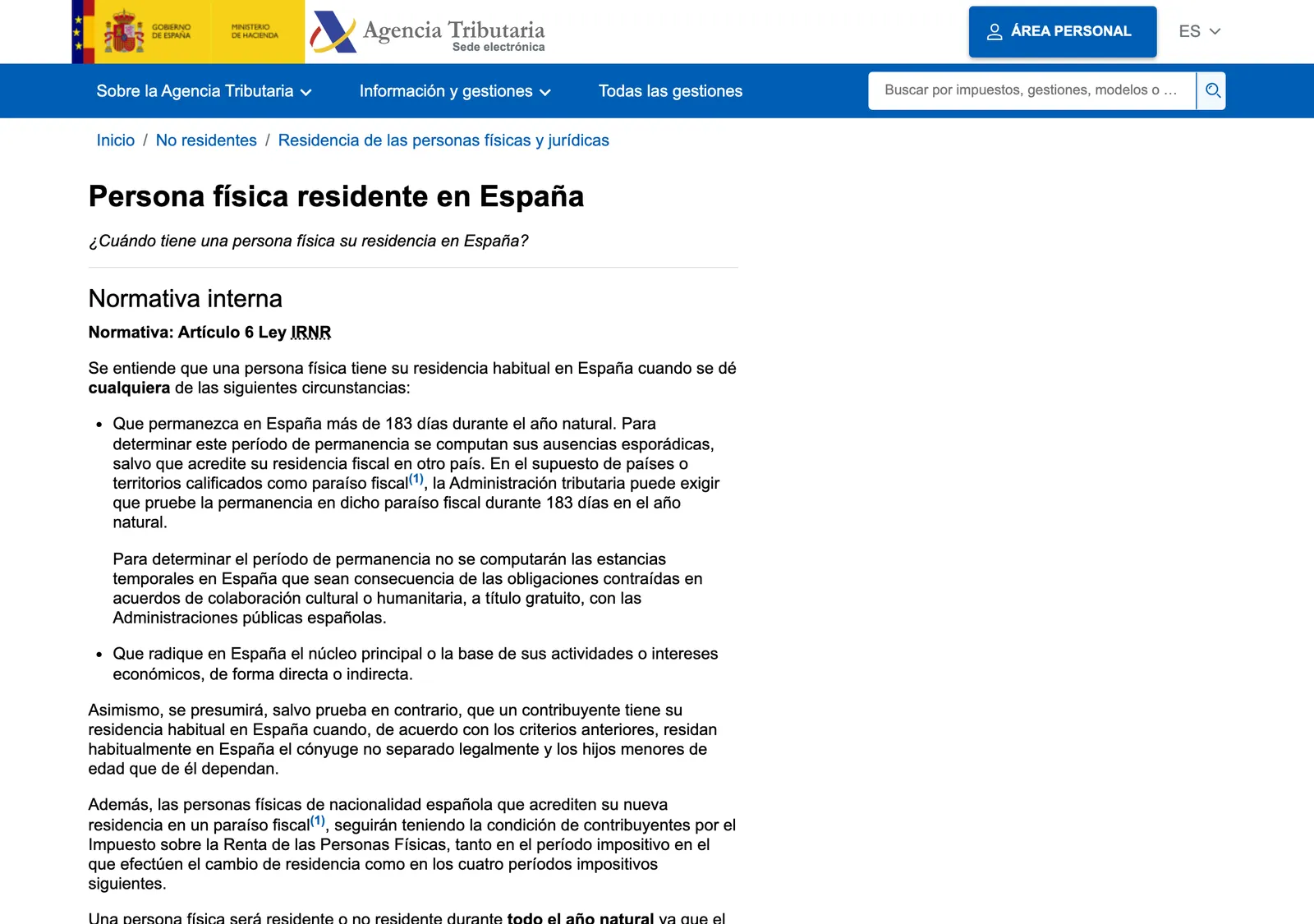
You are a Spanish tax resident if you stay in Spanish territory more than 183 days in the calendar year. You are also resident if the main centre or base of your activities or economic interests is in Spain. The tax residency guide covers the tests.
Modelo 720 must be filed by individuals resident in Spain who are IRPF taxpayers on their whole income. For foreign accounts, there is no duty to report if the combined 31 December balances do not exceed €50,000.
The return is filed online, between 1 January and 31 March of the following year. More on filing: Modelo 720 guide.
If you live on a pension, read the pension tax guide. A German pension has its own treaty rules in the German pension tax guide.
If you work for yourself: autónomo and the Beckham regime
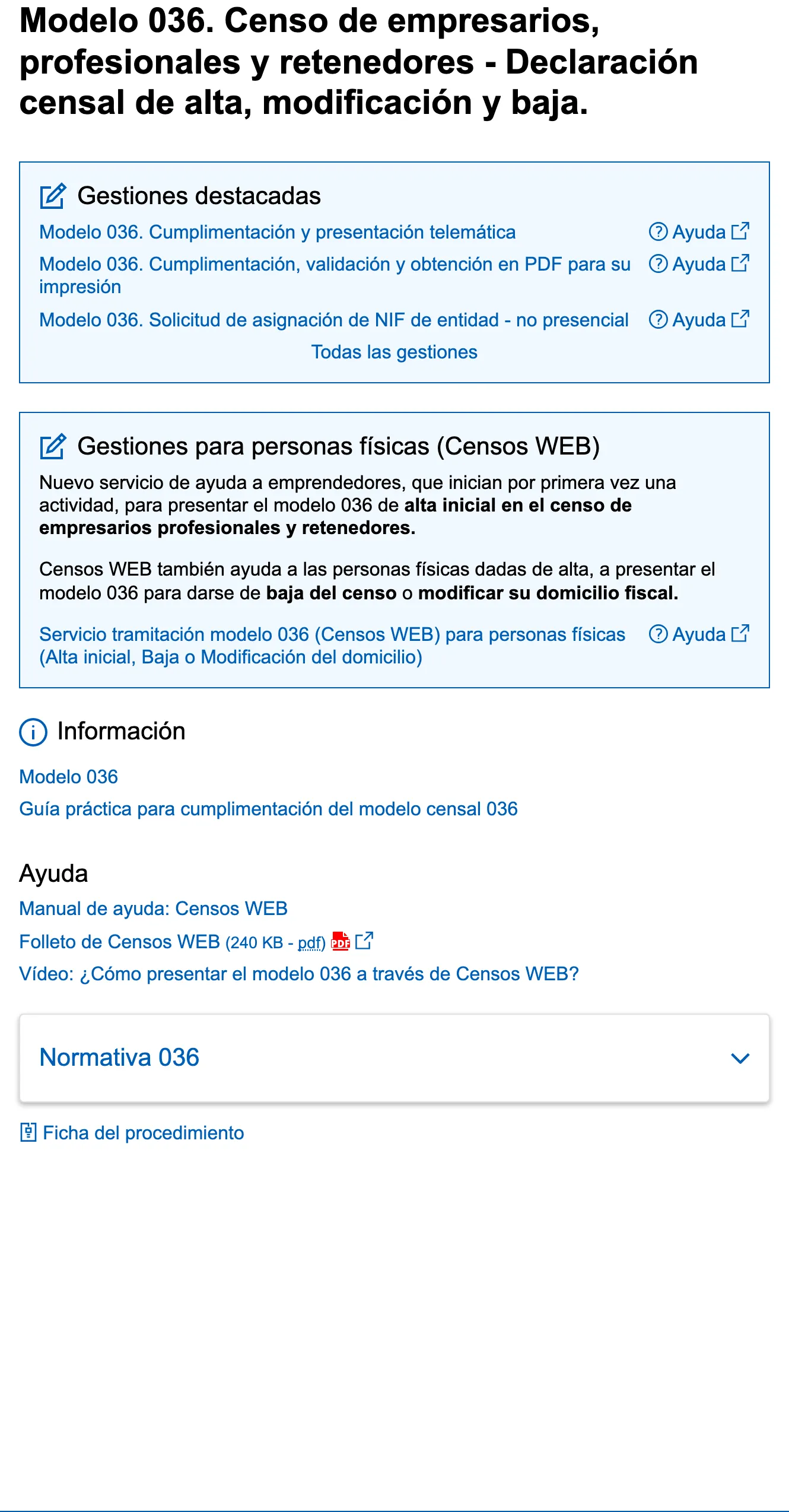
Register as self-employed in two steps. File the Modelo 036 census registration before starting activities. Request Social Security registration up to 60 calendar days before you start, online.
Modelo 037 was abolished, and individuals now use Modelo 036. The autónomo guide covers both steps.
People who move to Spain for a job or an entrepreneurial activity may opt to be taxed as non-residents for the year of the move and the five that follow. They must not have been resident in Spain during the five tax years before the move. The deadline is six months from the activity start date shown in the Social Security registration. More: Beckham law guide.
Later: permanent residence and school places
Foreigners who have resided legally and continuously in Spain for the five years before applying have the right to a national long-term residence authorisation. Absences of up to six continuous months do not break continuity, within a total of ten months. File during the two months before your current authorisation expires. The decision comes within three months, or the application is deemed granted.

The permanent residence guide covers the route.
Foreigners under sixteen have the right and the duty to education. In 2026, applications for Infantil and Primaria ran from 7 to 18 May. Applications are filed exclusively online through Adminova. For schools, see the school enrolment guide and the international schools guide.
Photo credits
- The Estacio del Nord, the main railway station next to Extramurs: Diego Delso, Wikimedia Commons (opens in a new tab) (CC BY-SA 4.0)
- The Turia gardens in Valencia, with the Àgora building and a bridge in view: Esniom, Wikimedia Commons (opens in a new tab) (CC BY-SA 4.0)
Step by step
- EU citizens: register instead of a visaApply in person within three months of entering Spain with form EX18; the certificate is issued immediately.
- Choose your visa route before you leaveA remote worker files the teleworking visa at a Spanish consulate. A non-lucrative applicant files the visa and the residence authorisation at the consulate.
- Sign a lease and check the depositNo agency fees and no rent-default insurance. The landlord deposits the fianza with the Generalitat within one month.
- Register on the padrónBook a cita previa on the city website or by phone; it is free.
- Request the NIE or TIE at the police stationBook on the ICP website. On a general-regime visa over six months, apply for the TIE in person within one month; not on a digital nomad visa.
- Open a bank accountBring a valid passport or TIE.
- Register for SIP and choose your doctorSIP registration carries no fee. SIP holds your area, zone, centre and doctor.
- Exchange your driving licenceA non-EU licence is valid for at most six months after you acquire normal residence.
- Check your tax residencyMore than 183 days in the calendar year makes you tax resident.
Not confirmed: Which police station covers your address if you live outside València city: the ICP portal names it when you book. Appointment availability: slots appear on the ICP portal when you book. Whether your assets abroad pass the reporting thresholds: compare them in the Modelo guide.
Reach readers planning life in Valencia. Advertise → hello@settlevalencia.com
Common questions
What do I do first after arriving in Valencia?
Register on the padrón: everyone who lives in Spain must. In València, book a cita previa on the city website or by phone. Padrón procedures at the Ajuntament are free. Then, on a general-regime visa over six months, request the TIE within one month; not on a digital nomad visa.
Do I need both a NIE and a TIE?
A NIE is the personal number given to a foreigner with ties to Spain. It does not authorise residence in Spain. The TIE is the card that proves your legal situation. You request it in person within one month if a general-regime visa covers more than six months; digital nomad visa holders wait for the residence authorisation.
Where do I get my TIE in Valencia?
The police station, not the Oficina de Extranjería. Book the cita previa on the ICP website. For people living in València city, non-EU cards are issued at the Comisaría de Patraix, C/ Dels Gremis, 6. Bring form EX17 and the fee receipt.
Can I open a bank account as a newcomer?
People legally resident in the European Union have a right to a basic payment account. The bank may charge a single monthly fee of at most EUR 3 for the basic services. Identity documents must be valid when the bank relationship is established.
When must I exchange my driving licence?
Within six months: a foreign non-EU licence is valid for at most six months from when its holder acquires normal residence in Spain, unless a bilateral agreement sets another rule. Exchanging an EU or EEA licence requires no exam. You book a cita previa in person at a Jefatura.
When do I become a Spanish tax resident?
After 183 days: you are tax resident if you stay in Spanish territory more than 183 days in the calendar year. You are also resident if the main centre or base of your activities or economic interests is in Spain. A spouse and dependent minor children living in Spain create a presumption.
I have an EU passport. Do I need a visa?
No. For stays under three months a valid passport or ID document is enough. For longer stays you register in the Central Register of Foreigners, within three months of entering Spain. The form is EX18 and the fee is €12.00.
Does the route change for a remote worker or a retiree?
A remote worker for a company outside Spain files the teleworking visa at a Spanish consulate. A non-lucrative applicant files the visa and the residence authorisation together at the consulate. A non-lucrative holder applies in person for the TIE within one month of entering Spain.
What can a landlord charge me in Valencia?
Agency and contract-formalisation fees cannot be charged to the tenant. A landlord may not require rent-default insurance. The landlord may never demand more than one month's rent in advance. The fianza equals one month's rent for a housing lease.
Read next
General information checked against the sources listed above, not legal advice for your situation. Rules and office practice change; confirm with the immigration office or a licensed adviser before you act. See how guides are checked.
Spotted an error? Report it.