SIP Card in Valencia: How to Get Your Health Card (2026)
The SIP card is Valencia's public health card, and registering carries no fee. Register online with a digital certificate or Cl@ve, or in person at your nearest health centre. Then collect the card, or an inclusion document, at the centre for your home. You must be on a Valencian padrón.
Also in: Deutsch
On this page
Not sure how to get on Valencia’s public health system? Start with the SIP, the register behind your health card, then pick the route that matches your cover. The next section explains what it is.
What the SIP is, and what it is not
The SIP holds your identification, location, entitlement data and your assigned area, zone, centre and doctor. Everyone in it has one unique, permanent SIP number.
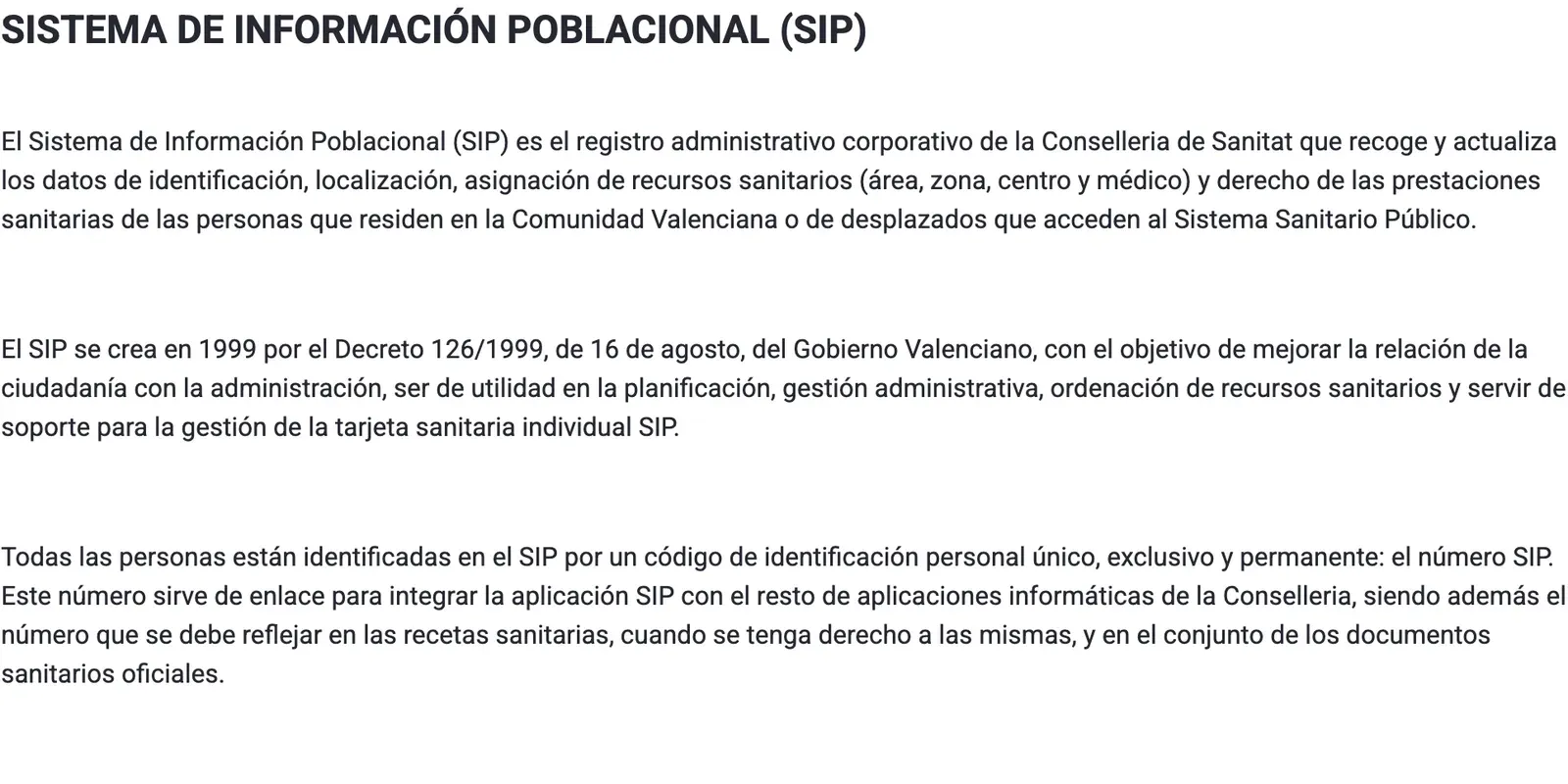
Two documents come out of that register. Insured persons and their beneficiaries who live in the Comunitat Valenciana receive the individual health card, the card people call the SIP card. Everyone else registered in SIP receives a personal administrative document with their SIP number.
Holding the card does not recognise public benefits that are not recognised when you use it. The card is valid across Spain and recognises no rights outside Spanish territory.
The right behind the card sits in article 3 of Ley 16/2003, in the version written by Royal Decree-law 7/2018.
Son titulares del derecho a la protección de la salud y a la atención sanitaria todas las personas con nacionalidad española y las personas extranjeras que tengan establecida su residencia en el territorio español.
The holders of the right to health protection and health care are all persons of Spanish nationality and foreign persons who have established their residence in Spanish territory.
BOE · Ley 16/2003, art. 3.1
To make that right effective at public expense, you must fall within one of the cases in article 3.2. A foreign national with legal and habitual residence in Spain and no obligation to prove cover by another route is one of them. Once the right is recognised, the health administration issues the individual health card.
Which route fits your situation?
Find your row; the matching section lists the documents.
| Your situation | Where you start | What you receive |
|---|---|---|
| Registered with Social Security and covered | Your nearest health centre | The SIP health card |
| EU citizen on a temporary stay, with a European Health Card | Your nearest health centre | A temporary inclusion document |
| Private insurance, no public cover | Your nearest health centre | An inclusion document with your SIP number |
| Uninsured resident with no other public cover | A convenio especial application | A temporary inclusion document |
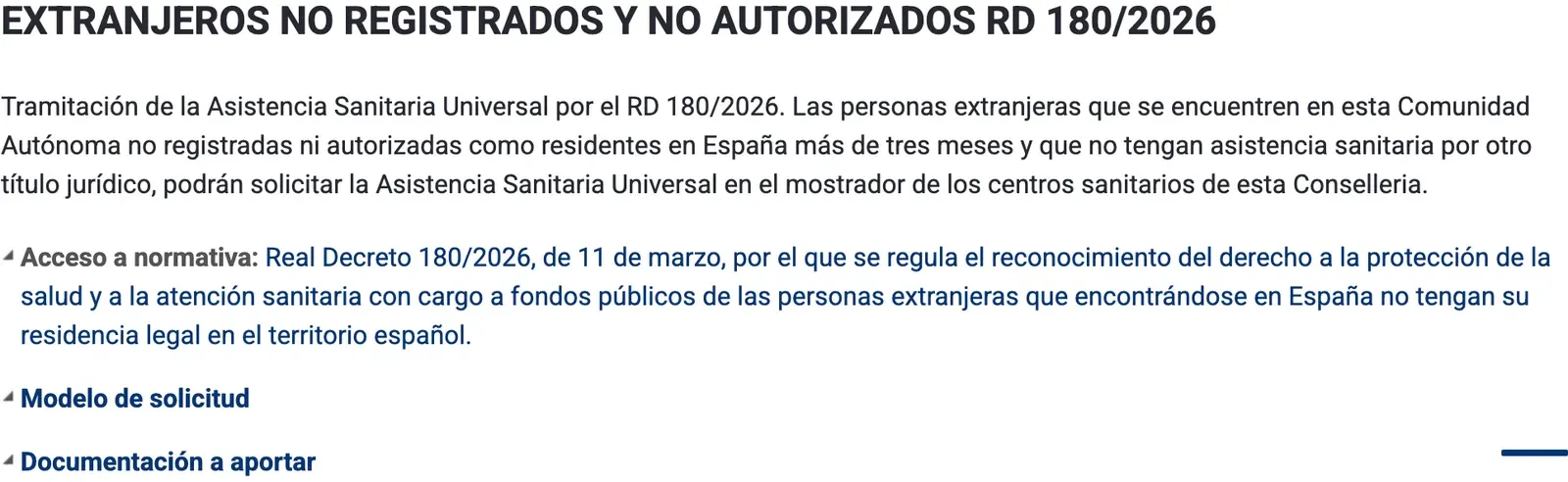
| Not registered or authorised as a resident, no cover | The counter at a Conselleria health centre | A document proving your right |
Employee or autónomo registered with Social Security
Go to your nearest health centre with your ID (DNI or NIE). Add a current padrón certificate, valid six months, and the INSS document proving your right to health care. The health centre registers you in SIP and issues the card.
The Seguridad Social online office lets you check and obtain that INSS document.
EU citizen on a temporary stay, with a European Health Insurance Card
This route suits a citizen of another EU country who is visiting, not resident. Request the card in your home country. On arrival, take it, or the Provisional Replacement Certificate, to your nearest health centre. You are entitled to a temporary inclusion document, which you carry to the health centre or hospital.
People entitled to care under EU Social Security rules have access to it if they reside in Spain or during temporary stays.
Foreign resident with private insurance
Go to your nearest health centre to get a SIP number. Bring identity documents such as your NIE or passport. The padrón certificate is not mandatory on this route.
You receive an inclusion document showing the SIP number, not a tarjeta SIP. If your policy excludes certain treatments, such as serious, supervening or infectious disease, you may request universal health care for those treatments.
Resident with no cover at all
A person with no right to publicly funded care under article 3.2 may obtain it by paying a fee under a special agreement, the convenio especial. The convenio especial guide covers the fee, documents and timeline.
A signatory receives a temporary inclusion document, not a SIP card.
No residence papers, or less than three months in Spain
Care is still reachable: ask your nearest health centre to refer you to the health social worker. The social worker studies your situation and assesses universal health care or the convenio especial.
After more than three months in Spain, you may apply for universal health care at the counter of a Conselleria health centre. The route is for people neither registered nor authorised as residents and with no cover on another legal basis.
With less than three months in Spain, plans to live in the Comunitat Valenciana and a situation of special vulnerability, you may request a social-work appointment at the same counter.
Royal Decree 180/2026 sets the procedure. You file a responsible declaration on the three conditions of article 3 ter.2 of Ley 16/2003:
- You have no obligation to prove mandatory cover by another route under EU law, bilateral agreements or other rules.
- You cannot export the right to health cover from your country of origin.
- No third party is obliged to pay.
If your country has a Social Security agreement with Spain that covers health care, add a certificate from its health institution stating that export of cover does not apply. Prove identity with a passport or official ID from your home country. Prove residence with an up-to-date padrón certificate. If you cannot get the slip, utility bills in your name that show an address also work.
Missing documents do not block the social-worker appointment. When you file, you receive a provisional document proving the application was submitted. The decision is due within three months. After that, a request you started yourself is deemed approved by administrative silence.
El documento acreditativo del derecho a la protección de la salud y a la atención sanitaria con cargo a fondos públicos no tendrá caducidad, manteniéndose su vigencia hasta que la persona interesada alcance por otra vía el derecho a la asistencia sanitaria.
The document proving the right to health protection and health care at public expense will not expire, remaining valid until the interested person obtains the right to health care by another route.
BOE · Real Decreto 180/2026, art. 3.6
After hospital emergency care without cover, request a social-worker appointment at your nearest health centre as soon as possible.
If you draw a pension from another EU country, the S1 route for EU pensioners explains how that cover reaches your SIP card.
Get your SIP, step by step
Whatever your route, the process runs in five moves.
- Get on a Valencian padrón. SIP registration requires habitual residence in a Valencian municipality, which requires being on that municipality’s padrón.
- Choose online or in person. Register online with a digital certificate or Cl@ve. Without them, go to the health centre nearest your home.
- Bring the documents for your route. The sections above list them for each situation.
- Collect your card or inclusion document. After the online request, go to the health centre for your place of residence.
- Expect a padrón check. If you object to the electronic padrón check, bring a padrón certificate to your assigned health centre after you file.
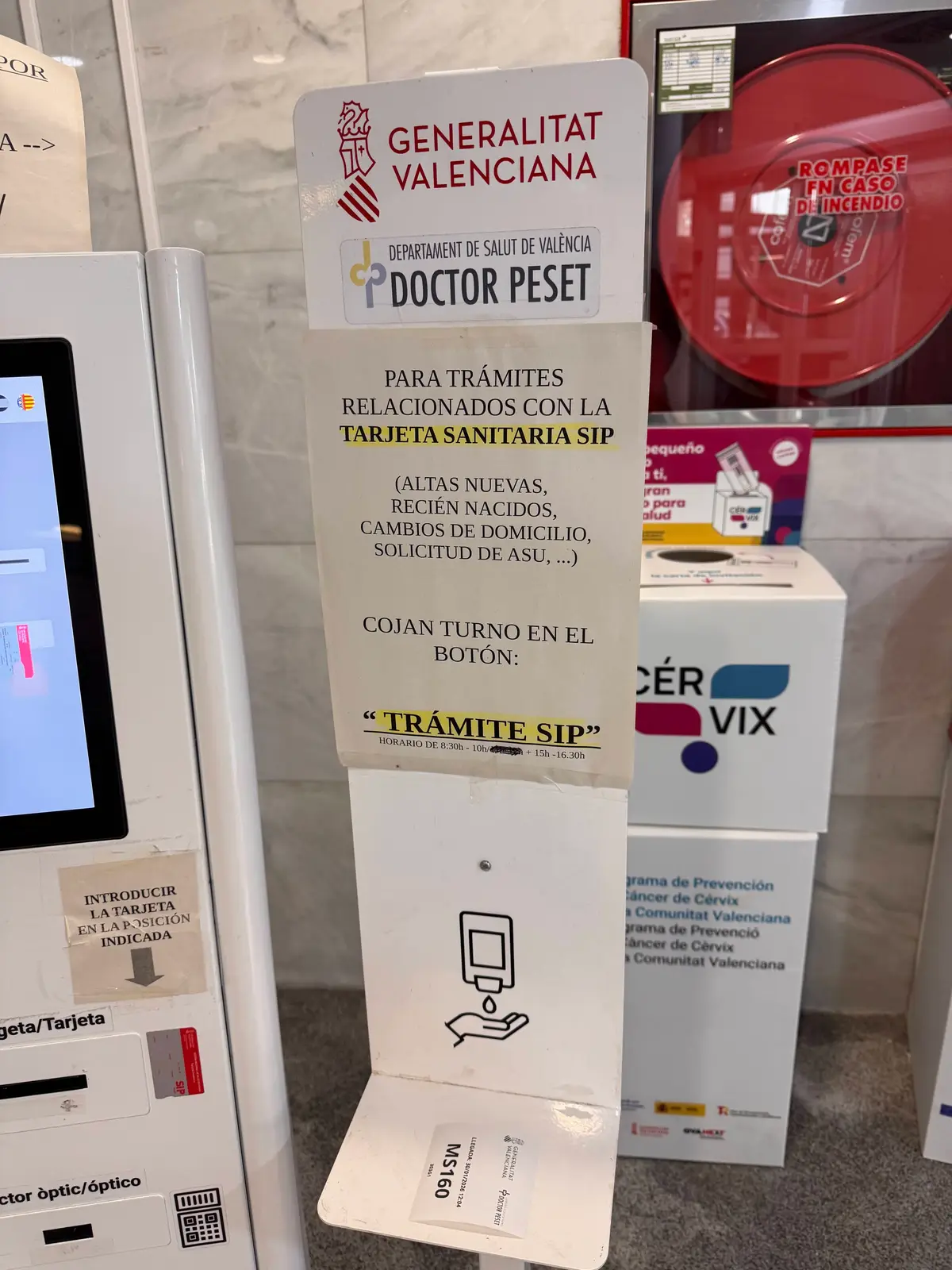
The request carries no fee and stays open all year.
What does it cost, and how long does it last?
Registration is free. A lost card costs €3.15.
| Item | Cost or rule |
|---|---|
| SIP registration | No fee |
| Lost card | €3.15, paid through a form from the health centre |
| Card expiry | The card shows an expiry date; after it the card is not valid |
Virtual SIP card
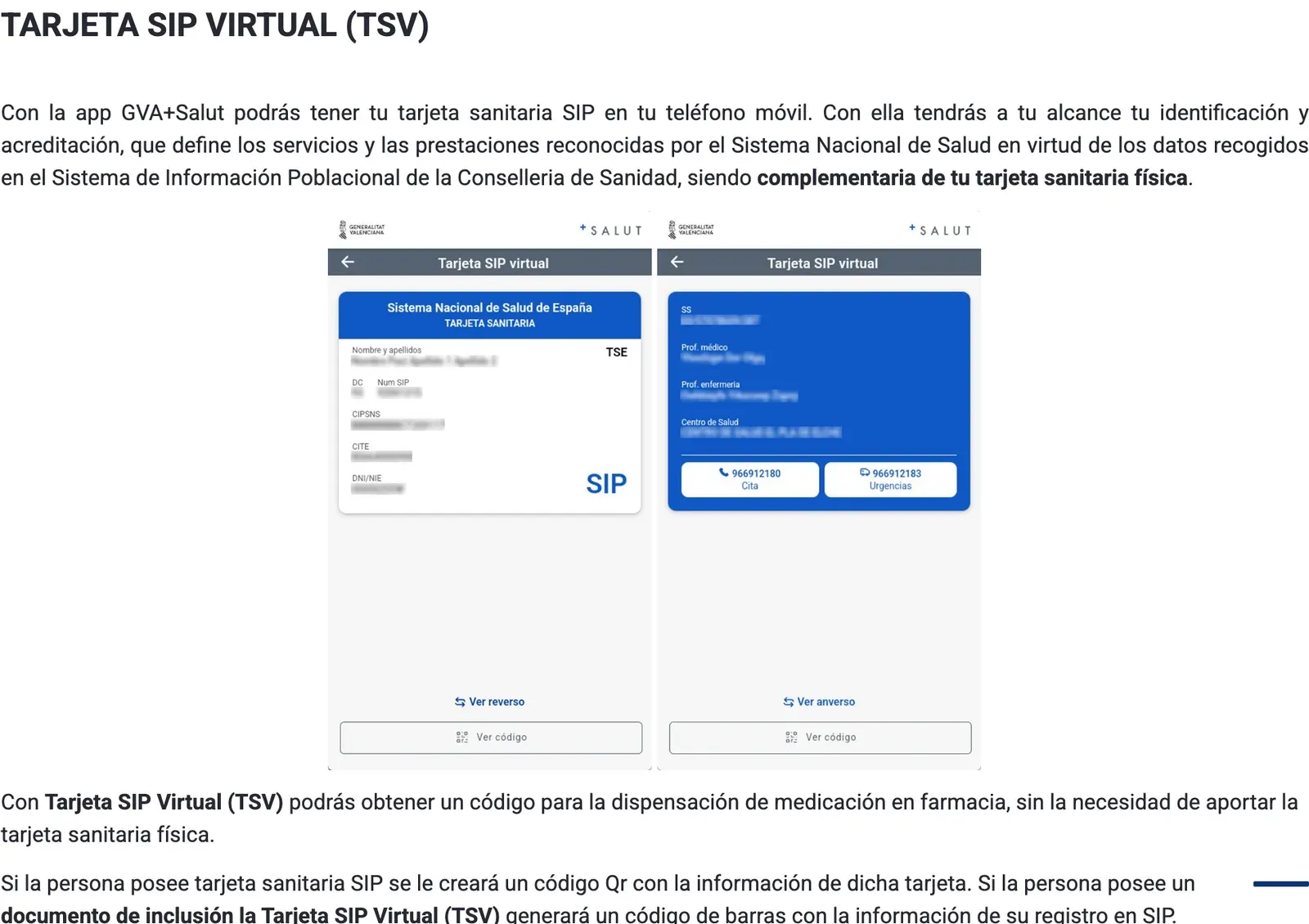
Carry your SIP card on your phone with the GVA+Salut app. The app gives you a code to collect medication at a pharmacy without the physical card. A card holder gets a QR code; an inclusion-document holder gets a barcode with their SIP registration data. The virtual card stops being valid when you no longer hold the SIP card.
Travelling outside Spain
Neither the physical nor the virtual card recognises rights outside Spain, and neither equals the European Health Insurance Card. For an EU or EEA trip, request that card from the INSS. People insured in Spain request or renew it free of charge in the Seguridad Social online office.
Using the card: appointments, pharmacy and emergencies
Show your SIP card whenever you request or receive benefits at public care centres and at pharmacies.

Book a cita previa
Phone the appointment number printed on your SIP card, or call 96 183 90 00. You can also book or cancel through the Sanitat app or website; in the app, enter the SIP number without its first two digits. The Conselleria’s information line is 012, open Monday to Friday 08:00 to 19:00.
Pharmacy
Prescriptions in the public system carry a co-payment that rises with income, as a share of your taxable base on the income tax return.
| Who | Share you pay |
|---|---|
| Active insured persons and beneficiaries not in the bands below | 40% |
| Active insured persons and beneficiaries, taxable base from €18,000 and below €100,000 | 50% |
| Anyone with a taxable base of €100,000 or more | 60% |
A convenio especial covers care but not pharmaceutical costs.
Emergencies
Call 112 for an emergency anywhere in the Comunitat Valenciana. Give your phone number and wait for the emergency services. Urgent health transport is part of the common basic portfolio and fully publicly funded.
The GP registration guide explains how to check your assigned doctor and change it.
For children’s cards, vaccines and paediatric visits, see the children’s healthcare guide.
Where are the health centres and hospitals?
Your SIP record shows your assigned centre and doctor. These centres and hospitals sit across the city.
Health centres
Centre de Salut Ruzafa, Carrer de Sant Valero, 8. Open in Google Maps (opens in a new tab)
Carrer de Sant Valero, 8, L'Eixample, 46005 Valencia, Spain · Open in Google Maps (opens in a new tab)
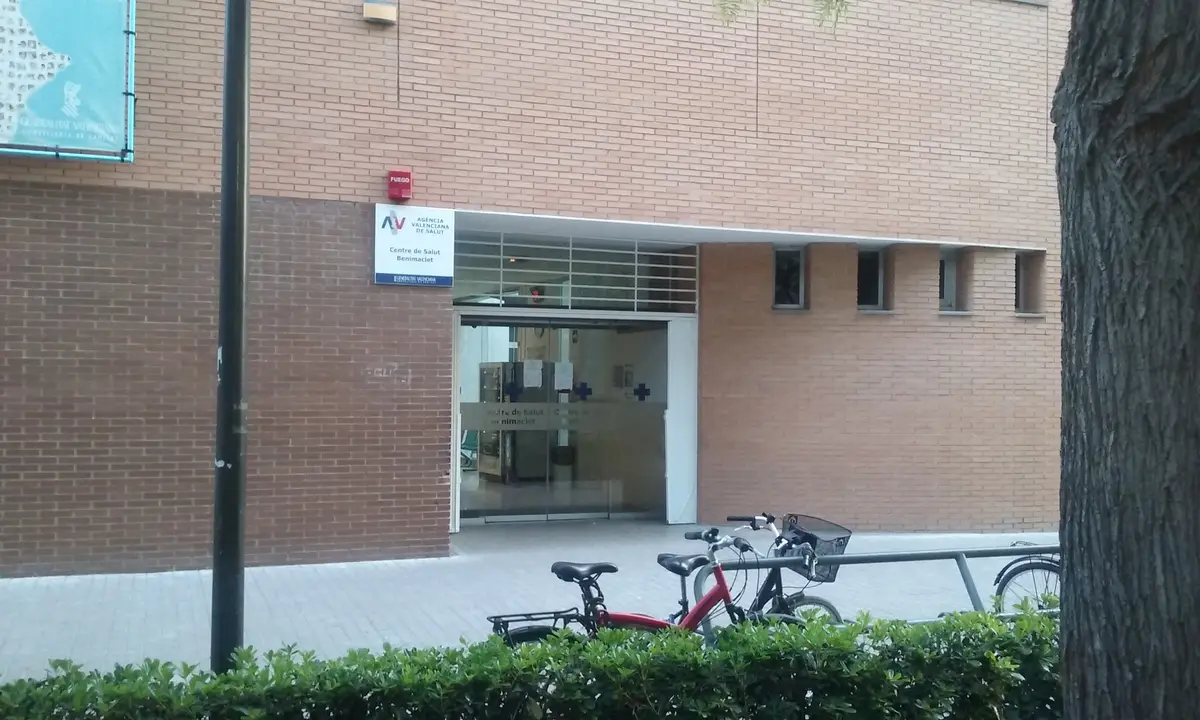
Centre de Salut Benimaclet, Carrer de la Guàrdia Civil, 13. Open in Google Maps (opens in a new tab)
Carrer de la Guardia Civil, 13, Benimaclet, 46020 Valencia, Spain · Open in Google Maps (opens in a new tab)
Centre de Salut Nàpols i Sicília (Ciutat Vella), Plaza Nápoles y Sicilia, 4. Open in Google Maps (opens in a new tab)
Plaza Napoles y Sicilia, 4, Ciutat Vella, 46003 Valencia, Spain · Open in Google Maps (opens in a new tab)
Hospitals
Hospital Universitari i Politècnic La Fe, Avinguda de Fernando Abril Martorell, 106. Open in Google Maps (opens in a new tab)

Avinguda de Fernando Abril Martorell, 106, Quatre Carreres, 46026 Valencia, Spain · Open in Google Maps (opens in a new tab)
Hospital Clínic Universitari de València, Av. de Blasco Ibáñez, 17. Open in Google Maps (opens in a new tab)
Av. de Blasco Ibanez, 17, El Pla del Real, 46010 Valencia, Spain · Open in Google Maps (opens in a new tab)
Hospital General Universitari de València, Av. de les Tres Creus, 2. Open in Google Maps (opens in a new tab)
Av. de les Tres Creus, 2, L'Olivereta, 46014 Valencia, Spain · Open in Google Maps (opens in a new tab)
Hospital Universitari Doctor Peset, Av. de Gaspar Aguilar, 90. Open in Google Maps (opens in a new tab)
Av. de Gaspar Aguilar, 90, Patraix, 46017 Valencia, Spain · Open in Google Maps (opens in a new tab)
Fixing common problems
Each snag below has a short fix.
- The card shows no entitlement when you use it. Holding the card does not recognise benefits that are not recognised at that moment. Request the health social worker at your health centre.
- You moved house. Tell the health centre. It updates your address and names your new centre if the address changes it.
- You lost the card. Pay €3.15 through the form the health centre gives you.
- The online route fails. Go in person to the health centre nearest your home.
- You have no padrón slip on the Royal Decree 180/2026 route. Utility bills in your name that show an address can prove residence.
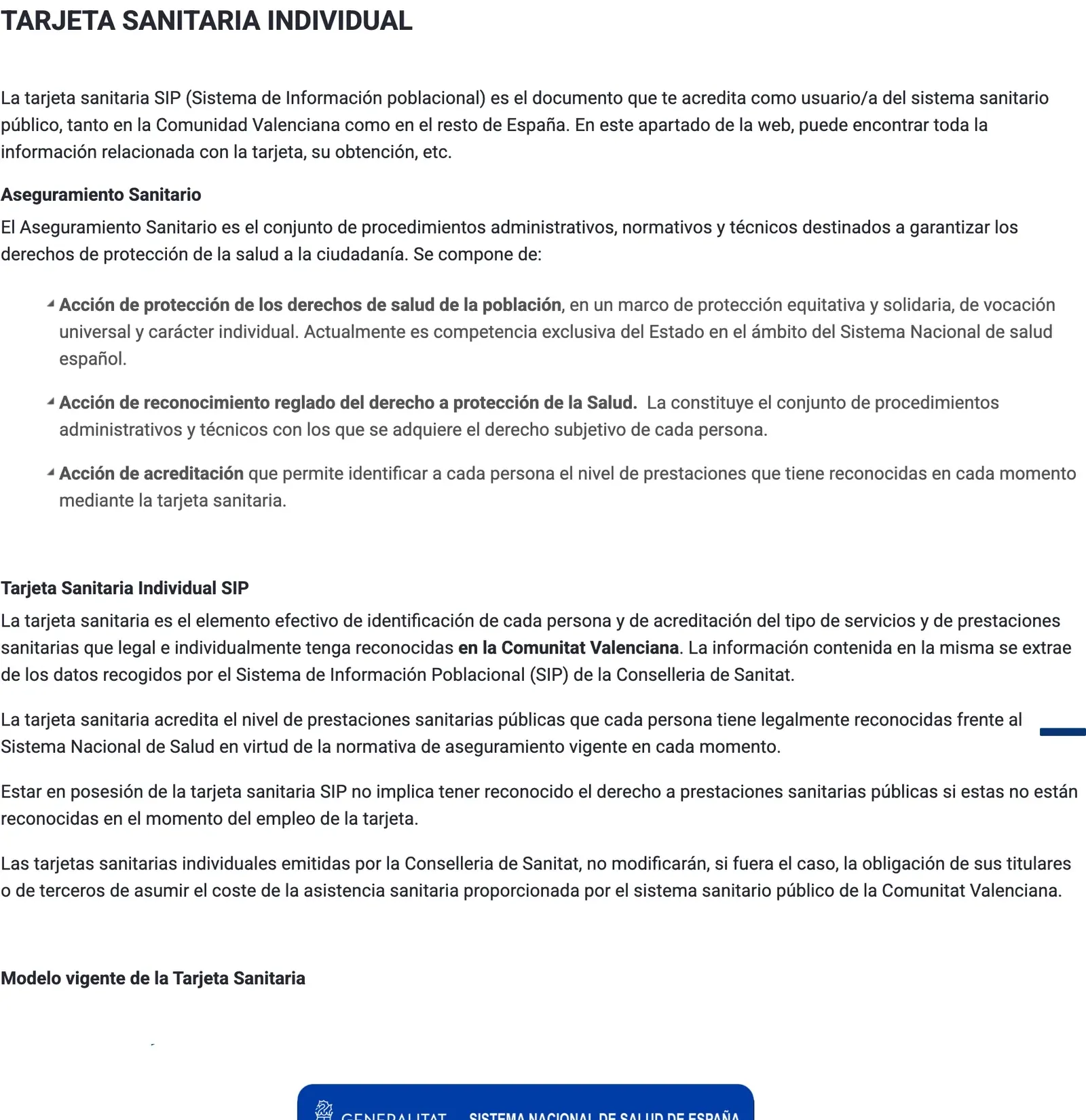
Photo credits
- Photos and clips uploaded to Google Maps (Centre de Salut Ruzafa on Google Maps (opens in a new tab), Hospital La Fe on Google Maps (opens in a new tab), Centre de Salut Benimaclet on Google Maps (opens in a new tab)) by Ricardo Pereira, Santi Sansa, Pablo G., Jesus Oubina Montanes.
Step by step
- Get on a Valencian padrónSIP registration requires habitual residence in a Valencian municipality, which requires being on its padrón.
- Choose online or in personRegister online with a digital certificate or Cl@ve; without them, go to the health centre nearest your home.
- Bring the documents for your routeA Social Security member brings a padrón certificate and the INSS document; a private-insurance holder brings an NIE or passport.
- Collect your card or inclusion documentAfter an online request, go to the health centre for your place of residence to collect it.
- Keep the card with youShow the SIP card at public care centres and pharmacies.
Not confirmed: Whether a legal resident with private insurance also qualifies for public cover: article 3.2 turns on having no obligation to prove cover by another route. Ask the health centre's social worker before you drop either. How long your card stays valid: read the expiry date printed on it.
Reach readers planning life in Valencia. Advertise → hello@settlevalencia.com
Common questions
What is a SIP card?
It is the personal, non-transferable document that identifies you and accredits you before the public health services. Insured persons and their beneficiaries who live in the Comunitat Valenciana receive the card. Other people registered in SIP receive an administrative document with their SIP number.
Is the SIP card free?
Yes. Registration in SIP carries no fee, and the request stays open all year. Only a lost card costs money: you pay €3.15 through a form that the health centre gives you. Check your health centre for how to pay it, as online payment is also possible.
Can I apply for the SIP card online?
Yes. You can register online with a digital certificate or Cl@ve. Afterwards you still go to the health centre for your place of residence to collect the card or the inclusion document. Without a digital certificate or Cl@ve, go to the health centre nearest your home.
Do I need to be on the padrón to get a SIP card?
Yes, on most routes. SIP registration requires habitual residence in a Valencian municipality, which requires being on that municipality's padrón. The route for foreign nationals with private insurance is the exception: the padrón certificate is not mandatory there. Bring your NIE or passport instead.
Does my SIP card work in other parts of Spain or abroad?
In Spain, yes. It recognises no rights outside Spanish territory. For a trip to another EU or EEA country, request the European Health Insurance Card from the INSS. Do that before you travel, because the SIP card is not equivalent to it.
What is the Virtual SIP card?
It is your SIP card on your phone, through the GVA+Salut app. It gives you a code to collect medication at a pharmacy without the physical card. It stops being valid when you no longer hold the SIP card.
What if I have no residence permit or no health cover yet?
Ask for the health social worker. Go to your nearest health centre and ask to be referred to the health social worker. The social worker studies your situation and assesses universal health care or the convenio especial. Missing documents do not block the social-worker appointment.
How do I get a SIP number with private insurance?
Go to your nearest health centre, in person. Bring identity documents such as your NIE or passport. You receive an inclusion document showing your SIP number, not a tarjeta SIP. The padrón certificate is not mandatory on this route.
Read next
Places in this guide
- health centrehealth centreCentre de Salut BenimacletCarrer de la Guardia Civil, 13, Benimaclet, 46020 Valencia, Spain
- health centrehealth centreCentre de Salut Napols i Sicilia (Ciutat Vella)Plaza Napoles y Sicilia, 4, Ciutat Vella, 46003 Valencia, Spain
- health centrehealth centreCentre de Salut RuzafaCarrer de Sant Valero, 8, L'Eixample, 46005 Valencia, Spain
- hospitalhospitalHospital Clinic Universitari de ValenciaAv. de Blasco Ibanez, 17, El Pla del Real, 46010 Valencia, Spain
- hospitalhospitalHospital General Universitari de ValenciaAv. de les Tres Creus, 2, L'Olivereta, 46014 Valencia, Spain
- hospitalhospitalHospital Universitari Doctor PesetAv. de Gaspar Aguilar, 90, Patraix, 46017 Valencia, Spain
- hospitalhospitalHospital Universitari i Politecnic La FeAvinguda de Fernando Abril Martorell, 106, Quatre Carreres, 46026 Valencia, Spain
General information checked against the sources listed above, not legal advice for your situation. Rules and office practice change; confirm with the immigration office or a licensed adviser before you act. See how guides are checked.
Spotted an error? Report it.