Public vs Private Healthcare in Spain for Expats
Legal residents of Spain get public care when they have no duty to prove cover another way. The non-lucrative and digital nomad visas both ask for health insurance. With no cover at all, a special agreement costs €60 a month under 65 or €157 from 65.
Also in: Deutsch
On this page
Public vs private at a glance
Public care is the default for legal residents. Private insurance is what the non-lucrative and digital nomad visa files ask for.

| Public system | Private insurance | |
|---|---|---|
| Who qualifies | Foreign nationals with legal and habitual residence and no duty to prove cover another way | Anyone who buys a policy; visa policies need an insurer authorised to operate in Spain |
| What it covers | Prevention, diagnosis, treatment, rehabilitation and urgent transport | What the policy lists; visa policies must match the risks the public system insures |
| Medicines | A 40%, 50% or 60% share; 10% with a cap for pensioners | Set by the policy |
| Health document | SIP card | Inclusion document with a SIP number |
Who gets public healthcare
Residence is the test. The law names foreign persons who have established residence in Spain.
Son titulares del derecho a la protección de la salud y a la atención sanitaria todas las personas con nacionalidad española y las personas extranjeras que tengan establecida su residencia en el territorio español.
The holders of the right to health protection and health care are all persons of Spanish nationality and foreign persons who have established their residence in Spanish territory.
BOE · Ley 16/2003, art. 3.1
To have that right made effective at public expense, a foreign national needs legal and habitual residence and no obligation to prove mandatory cover another way. Once the right is recognised, the health administration issues the individual health card.

If you are an EU or EEA visitor
EU rules entitle you to care during temporary stays. Request the European Health Insurance Card (EHIC) in your home country. On arrival, show it, or the provisional replacement certificate, at the nearest health centre. A temporary inclusion document follows; carry it to the health centre or hospital.
If you are a resident from outside the EU
Register for the SIP card (how to get it). First-time applicants can register online with a digital certificate or Cl@ve. Without them, go to the health centre nearest your home. The card is personal and non-transferable.
What the public system covers
The common basic portfolio covers all preventive, diagnostic, treatment and rehabilitation care given in health or socio-health centres, plus urgent medical transport, fully funded by the public purse. Show your SIP card whenever you request or receive benefits at public care centres and at pharmacies. The card is valid across Spain.
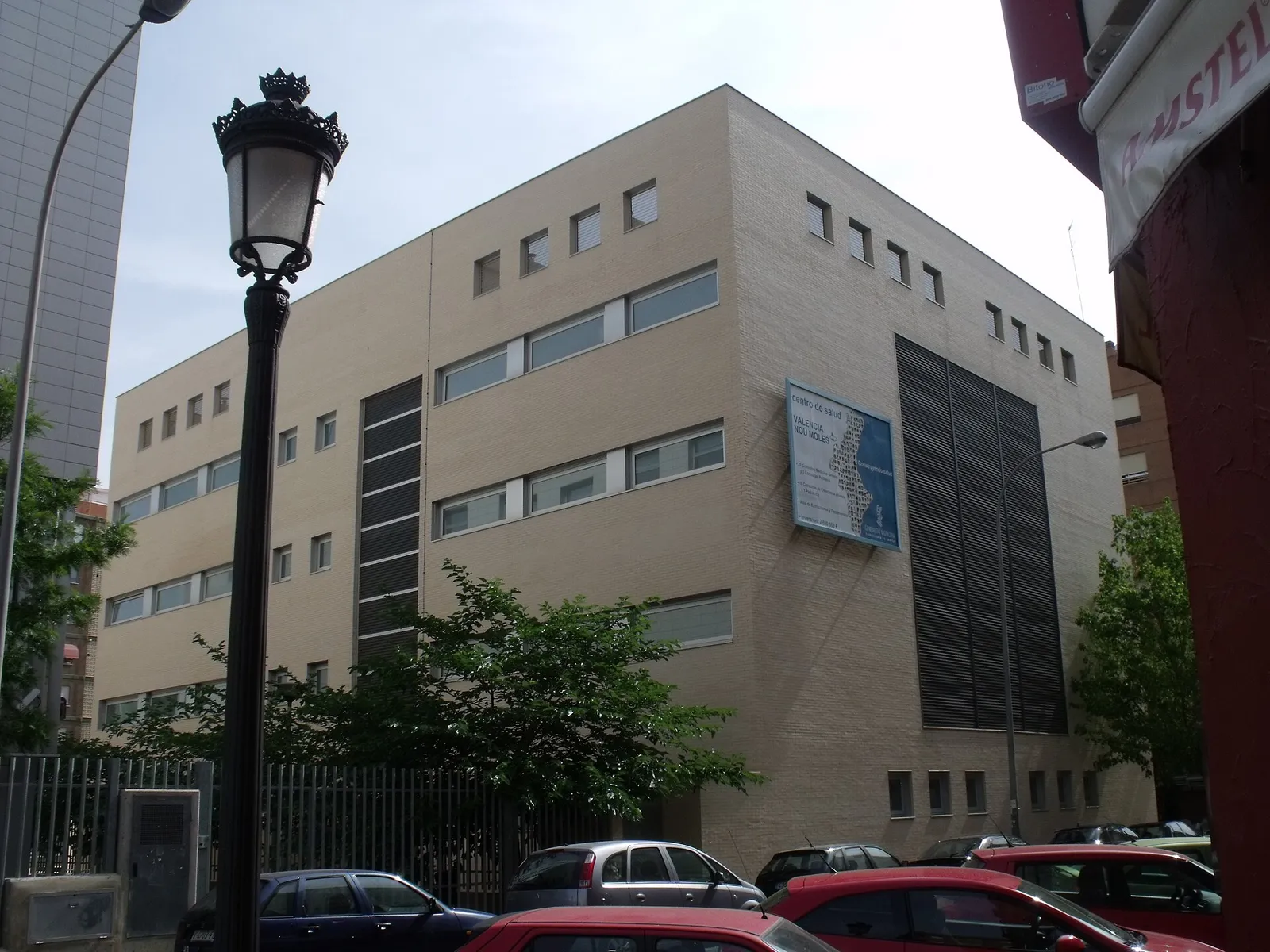
Start at a neighbourhood health centre, such as Centre de Salut Nàpols i Sicília in Ciutat Vella.
Plaza Napoles y Sicilia, 4, Ciutat Vella, 46003 Valencia, Spain · Open in Google Maps (opens in a new tab)
What you pay
Medicines are the cost you will notice: in the public system you pay a share of the price, set by your income.
| Taxable base (income tax return) | Share you pay |
|---|---|
| €100,000 or more | 60% |
| €18,000 up to €100,000 | 50% |
| Active insured persons and beneficiaries not in the bands above | 40% |
| Social Security pensioners under €18,000 | 10%, up to €8.26 |
| Social Security pensioners from €18,000 up to €100,000 | 10%, up to €18.59 |
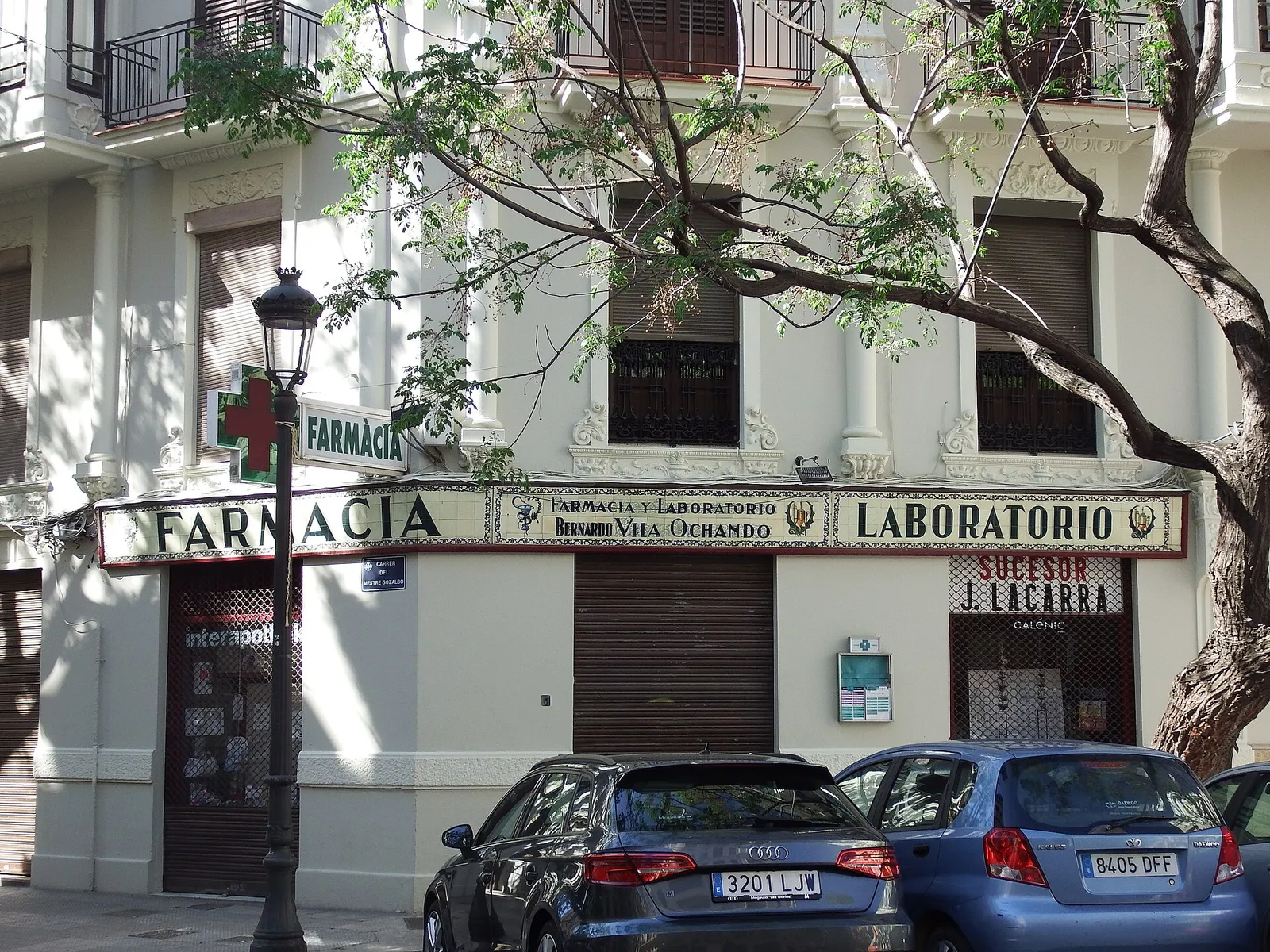
With no cover yet, the special agreement is a monthly fee and a private policy costs what the insurer prices it at. The table uses the fees published for Comunitat Valenciana.
| Route | You pay |
|---|---|
| Special agreement, under 65 | €60 a month |
| Special agreement, 65 or over | €157 a month |
| Private policy | Set by the insurer |
For scale, households in Comunitat Valenciana spent an average of €1,342.69 on health in 2025. For that figure next to other budget lines, see the cost of living guide.
When you need private insurance
Both visas below require health insurance.
Non-lucrative visa
The initial authorisation needs health insurance. Renewal needs insurance held throughout the authorisation being renewed, and kept. The consulates in London and Montreal ask for a certificate from an insurer authorised to operate in Spain, covering all the risks the public system insures. Montreal also rejects policies with a waiting period, co-payment or coverage limit.
London also accepts a receipt of S1 registration on the Social Security website as health insurance; your own consulate’s list may differ.
Digital nomad visa
Applicants need public health insurance, or private insurance with an insurer authorised to operate in Spain. Private cover must give coverage equivalent to the National Health System.
No se aceptan seguros de viaje, seguros basados únicamente en el reembolso de gastos médicos, seguros con copagos o períodos de carencia.
Travel insurance, insurance based only on reimbursement of medical expenses, and insurance with co-payments or waiting periods are not accepted.
Ministerio de Inclusión · guidance on initial digital nomad applications
Choose a policy with no co-payments and no waiting periods, and get the insurer to confirm that in writing before you pay.
Using a private policy with the public system
A foreign national with private insurance goes to the nearest health centre for a SIP number. Identity documents are required; the padrón certificate is not mandatory for this step. You receive an inclusion document showing the SIP number.
If your private policy excludes a treatment for a serious, supervening or infectious disease, you may request universal health care for those treatments through the health social worker.
If you have no cover
Two routes exist, and the chain below picks yours.
Special agreement (convenio especial)
The special agreement guide walks through the application.
Only people who are not insured or beneficiaries of the National Health System and who live in Spain can sign. Three requirements apply:
- Proof of effective residence in Spain for a continuous minimum of one year immediately before applying.
- Registration on the padrón of a municipality in the region when you apply.
- No access to a public health protection system on any other basis.
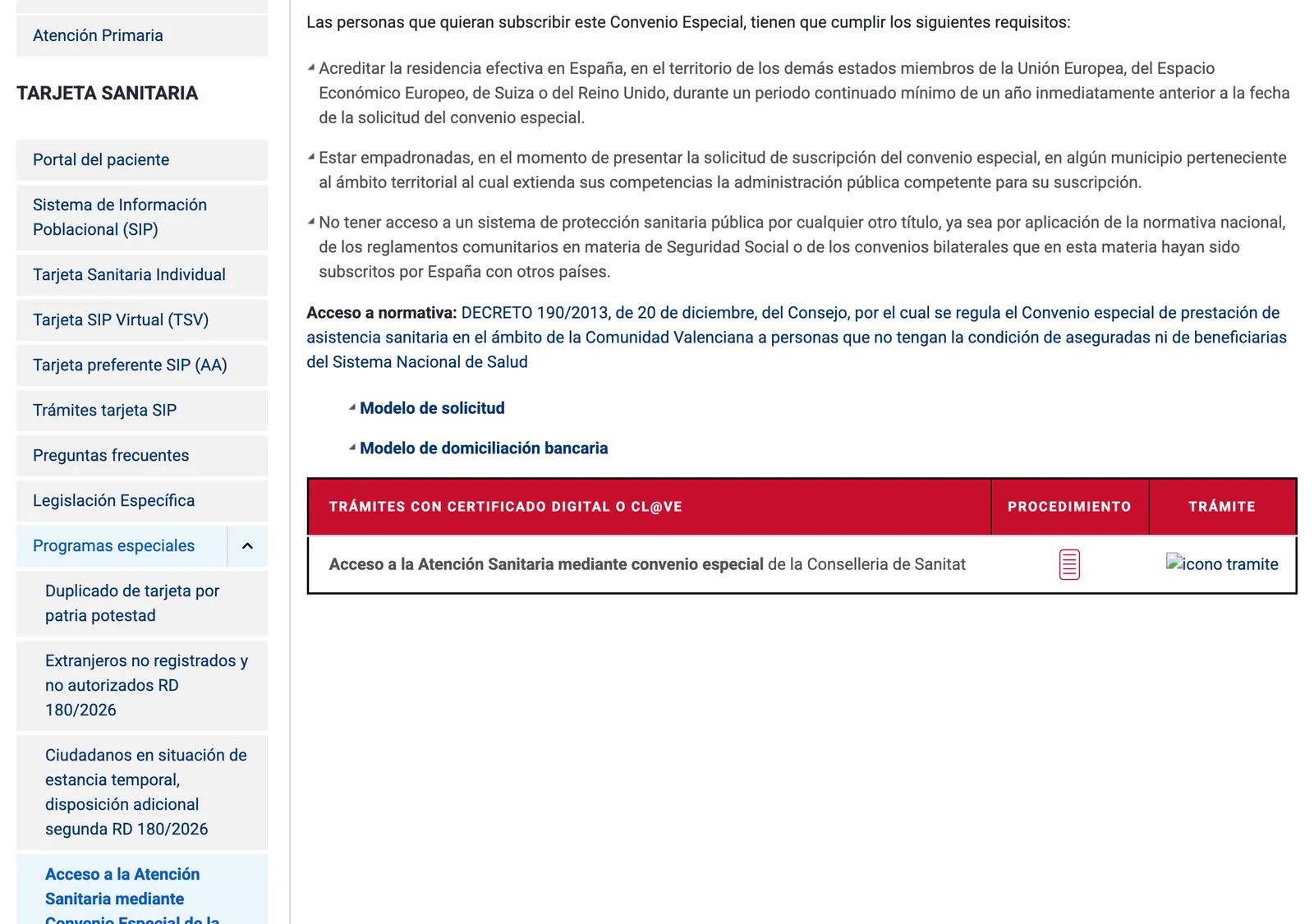
File the application at the register of the Territorial Directorate of Health, Gran Vía Fernando el Católico 74, 46008 Valencia, tel. 012. The window is open all year.
The administration must decide within 30 days; if it issues no decision, the application is deemed approved. You then have at most three months to formalise it. Fees go by direct debit and each fee after the first is due within the first ten calendar days of the month.
The agreement ends if you miss the first fee, two consecutive fees or three non-consecutive fees. The agreement covers health care except medicines, and you receive a temporary inclusion document, not a SIP card.
Universal health care (ASU)
Foreign persons in the region may apply at the counter of Conselleria health centres. This route is for foreigners in the region for more than three months who are not registered or authorised as residents in Spain. You also need to have no cover on another legal basis.
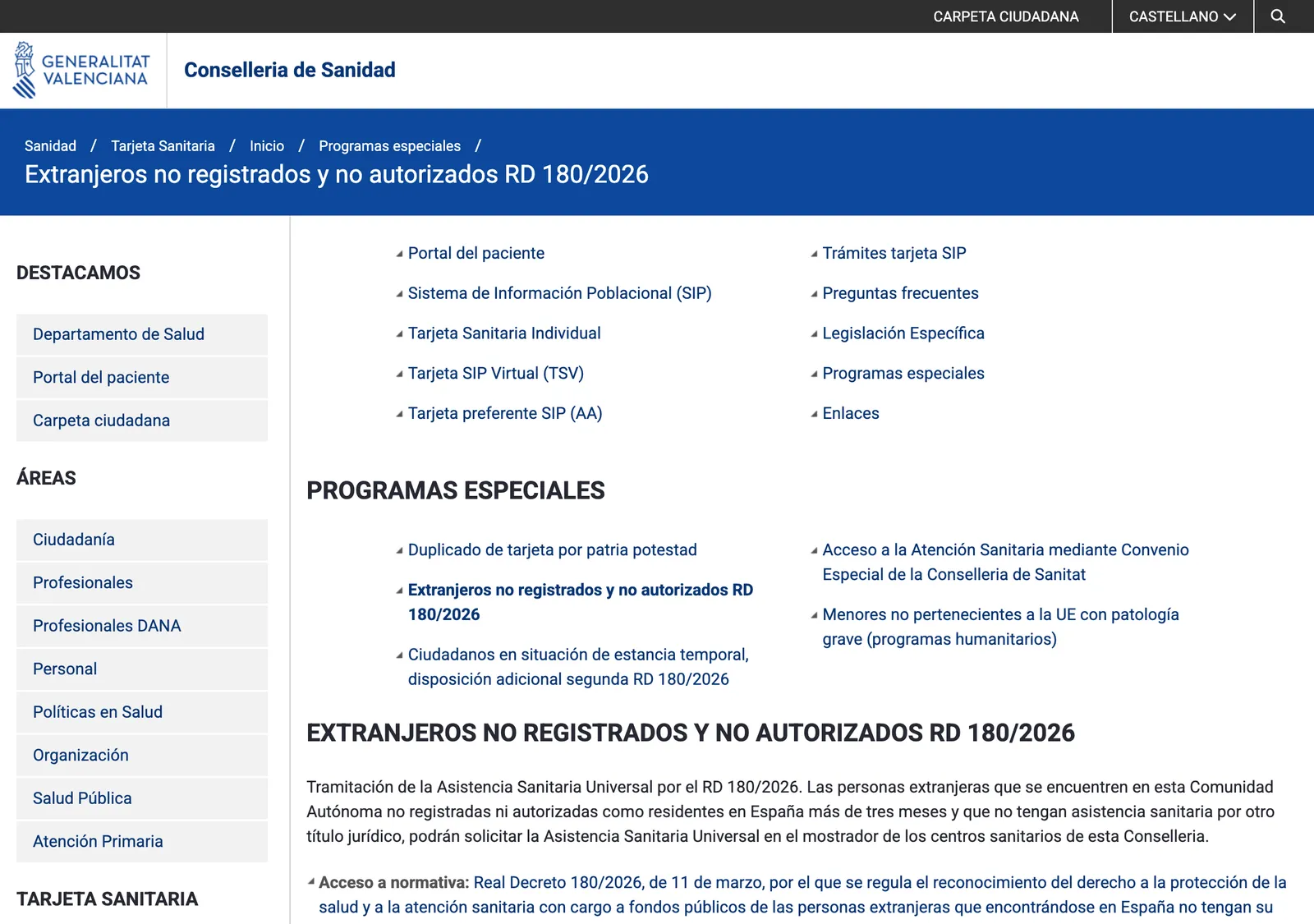
You file a responsible declaration. Habitual residence is proved with an up-to-date padrón certificate. Utility bills in your name showing an address can replace it. On filing you receive a provisional document proving the application has been submitted.
The decision comes within a maximum of three months. The document proving the right does not expire; it stays valid until you obtain the right by another route.
If you need care today
Missing documents do not block the social worker appointment. Ask the nearest health centre to refer you to the health social worker, who assesses access to universal health care or the special agreement. After emergency care in hospital, request that appointment as soon as possible.
Booking care and emergencies
With cover in place, the GP is next; the GP registration guide covers choosing one and a health centre.
Book an appointment (cita previa) by phone at the number printed on your SIP card, or by calling 96 183 90 00. You can also book or cancel through the Sanitat app or the Sanitat website.
For an emergency, call 112.

For travel inside the EU or EEA, a SIP holder requests the EHIC from the INSS.
Photo credits
- The Hospital General Universitari building in Valencia: Wikimedia Commons (opens in a new tab), Joanbanjo (CC BY-SA 3.0)
- A neighbourhood health centre in Valencia, the first stop for everyday care: Wikimedia Commons (opens in a new tab), 19Tarrestnom65 (CC BY-SA 3.0)
- A pharmacy in Valencia, where prescribed medicines carry a co-payment: Wikimedia Commons (opens in a new tab), 19Tarrestnom65 (CC BY-SA 4.0)
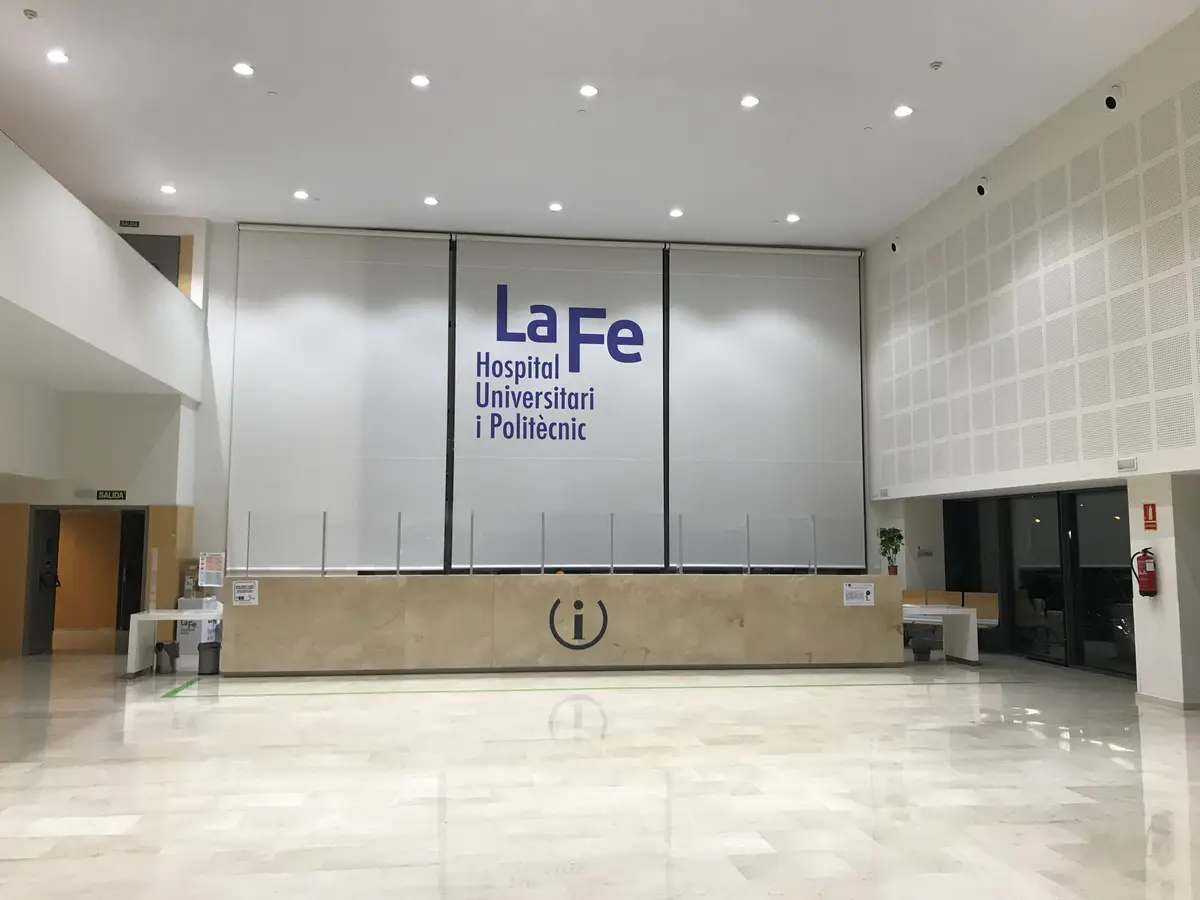
- Photos and clips uploaded to Google Maps (Hospital La Fe on Google Maps (opens in a new tab)) by Jesus Oubina Montanes, Robert Sanchez, Santi Sansa.
Not confirmed: Whether a visa holder with private cover for the visa also gets public care: ask the social worker at your health centre. Whether private care is faster: no official comparison exists, so ask the insurer for appointment times in writing.
Reach readers planning life in Valencia. Advertise → hello@settlevalencia.com
Common questions
Is healthcare free for expats in Spain?
Mostly, for legal, habitual residents: they are covered at public expense when they have no duty to prove cover another way. Working-age insured people pay 40%, 50% or 60% of prescribed medicines, by income. Social Security pensioners under €100,000 pay 10%, with a cap. Visitors from the EU use the EHIC.
Do I need private insurance for a Spanish visa?
Yes for the non-lucrative visa, which needs health insurance at the first application and at renewal. The digital nomad visa needs public or private insurance from an insurer authorised in Spain. Travel insurance does not qualify.
I have private insurance. Can I still get a SIP number?
Yes, a foreign national with private insurance gets a SIP number by going to the nearest health centre. The health centre issues an inclusion document with that number, not a SIP card. A padrón certificate is not mandatory for that SIP number.
How much will I pay for prescriptions?
It depends on your income: you pay 60% of the price when your taxable base is €100,000 or more. It is 50% from €18,000 up to €100,000. Active insured persons and their beneficiaries not in those bands pay 40%. Social Security pensioners pay 10%, capped at €8.26 under €18,000 and €18.59 up to €100,000.
What if I have no health cover at all?
You have two routes. Sign the special agreement if you are on the padrón and can show one year of effective residence in Spain. Without registration, apply for universal health care at the counter of a Conselleria health centre. Ask for the health social worker first.
What number do I call in a medical emergency?
Dial 112. The 1-1-2 Comunitat Valenciana service takes emergency calls from anyone in the region, including calls that need health care. Urgent health transport belongs to the public system's common basic portfolio and is funded in full.
Read next
Places in this guide
General information checked against the sources listed above, not legal advice for your situation. Rules and office practice change; confirm with the immigration office or a licensed adviser before you act. See how guides are checked.
Spotted an error? Report it.