Criminal Record Certificate for a Spain Visa: Steps (2026)
Your visa file has to show you have no criminal record in the countries where you lived during the last five years, and the digital nomad route also cites two years. Consulate pages set the certificate's age limit, 6 months on the US and London pages, and ask for an apostille and a Spanish translation.
On this page
- Which certificate does Spain ask for with a visa?
- Two years or five? It depends on the visa and the consulate
- How recent must the certificate be?
- Apostille and Spanish translation: what consulates want
- US, UK and Canada: which certificate to order
- What if you have a record, or your country will not issue a certificate?
- Step by step
- Common questions
Adults applying for a Spanish residence visa from abroad have to show no criminal record in the countries where they lived during the last five years, which in practice means a certificate from each of those countries. The details that trip people up are the years the certificate covers, its age limit and who translates it, and each is laid out below.
This is for non-EU applicants filing a visa abroad. If you are already living in Spain without a visa, the arraigo guide covers that route instead.
Which certificate does Spain ask for with a visa?
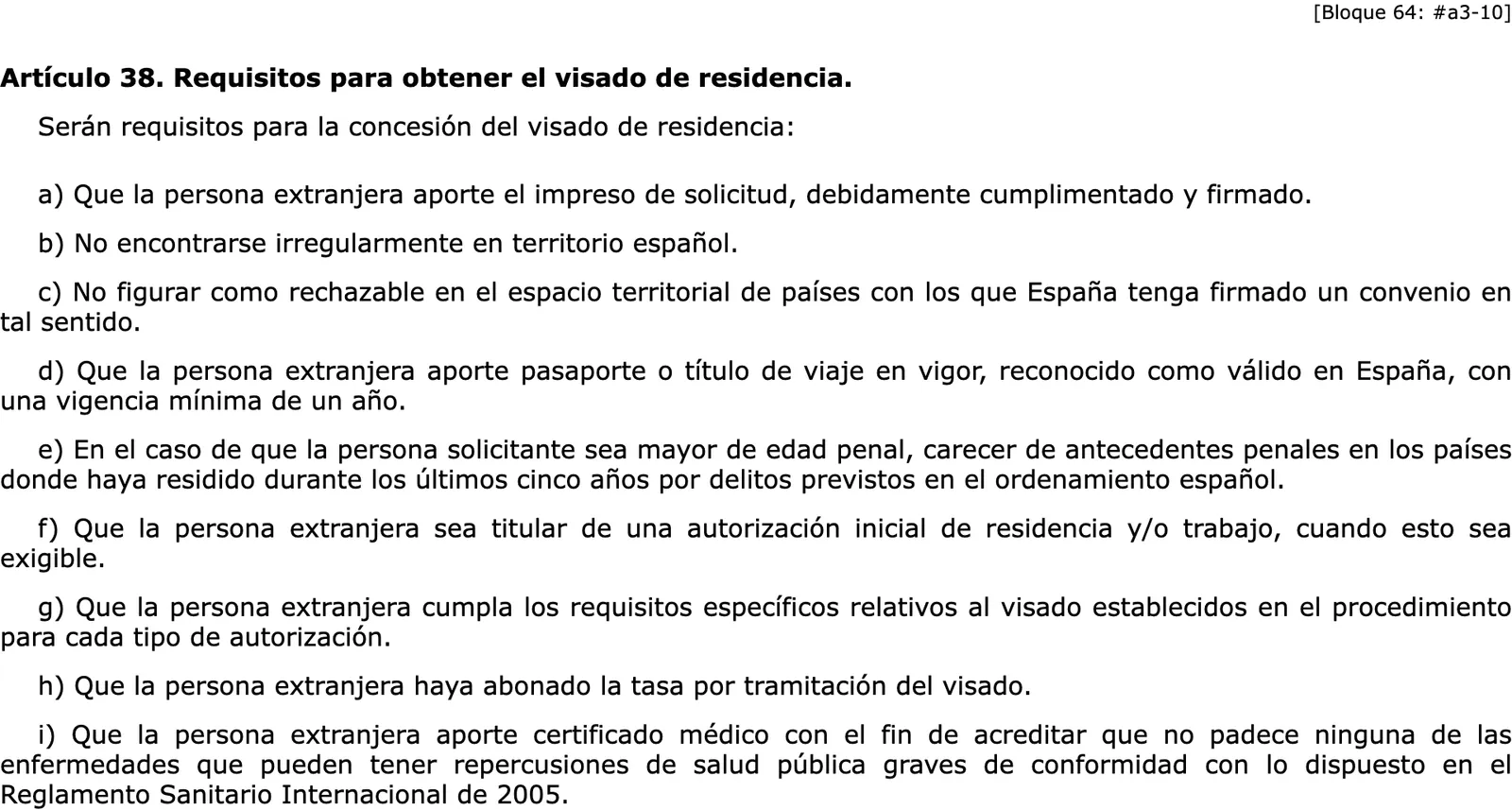
A certificate that shows no criminal record in the countries where you lived during the last five years, if you are an adult applicant.
e) En el caso de que la persona solicitante sea mayor de edad penal, carecer de antecedentes penales en los países donde haya residido durante los últimos cinco años por delitos previstos en el ordenamiento español.
e) If the applicant is of criminal age, have no criminal record in the countries where they have resided during the last five years for offences provided in Spanish law.
BOE · Real Decreto 1155/2024, art. 38 e
The non-lucrative visa application has to come with the documents that prove these general requirements. The Houston consulate applies it to applicants over 18, so ask your consulate about a minor’s file.
Two years or five? It depends on the visa and the consulate
The regulation says five years, the digital nomad route cites two years plus a five-year declaration, and consulates word it differently.
| Where it appears | Years covered | Declaration |
|---|---|---|
| Regulation, residence visa | 5 years | none stated |
| National law, digital nomad route | 2 years | 5 years |
| Ministry telework page | 2 years | none stated |
| London consulate, digital nomad | 2 years | 5 years |
| Houston consulate, digital nomad | 5 years | 5 years |
| US consulate page, non-lucrative | 5 years | none stated |
Checked November 2026. The consulate rows are practice on each consulate’s own page, so read your own consulate’s page.
We recommend building your list from the consulate that will take your file, and asking it before you order anything if its page is silent on the period.
How recent must the certificate be?
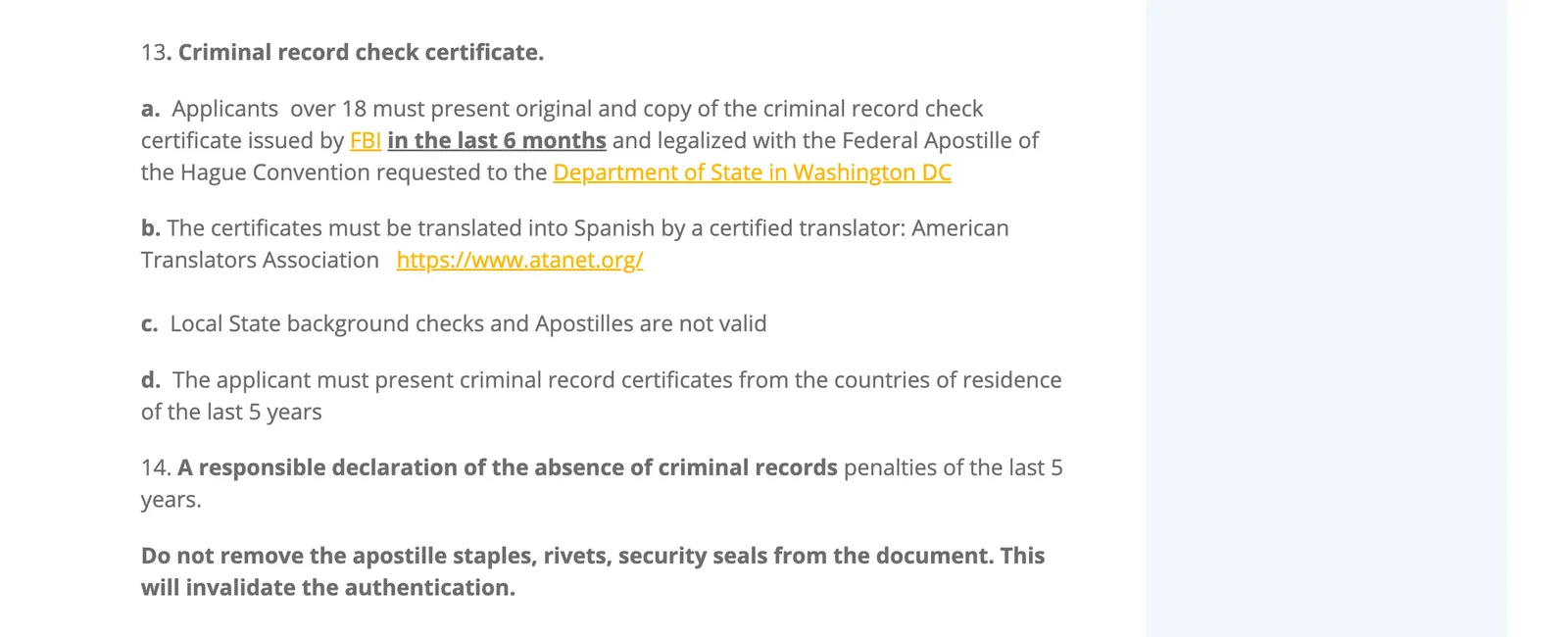
Check your consulate’s page, because the age limit sits there: the US pages and London say 6 months.
London adds one exception: a certificate that itself states a longer validity may be older. We recommend ordering yours once the rest of the file is nearly ready, so it does not age while you wait for other papers.
An apostille does not stretch a certificate’s life, because legalisation has no expiry date but does not extend a validity period the document already has. For FBI and ACRO fees and processing times, see Spain visa documents for US and UK applicants.
Apostille and Spanish translation: what consulates want
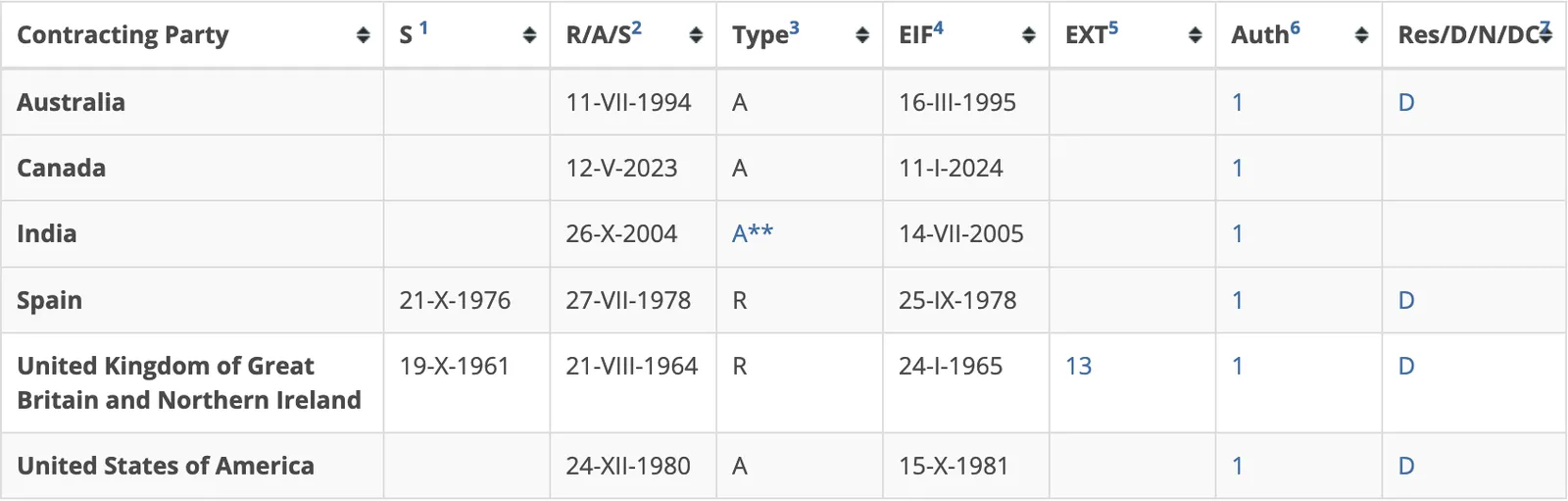
A certificate from the US, UK, Canada, Australia or India gets an apostille rather than consular legalisation, because all five appear in the Hague Apostille Convention table.
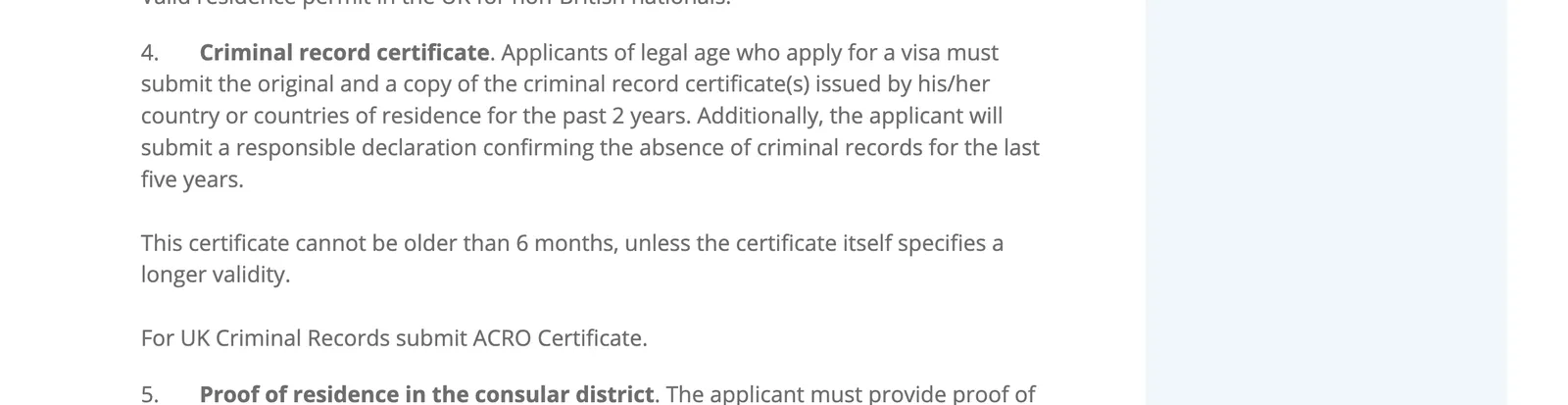
Canada is the most recent of the five, with the convention in force there since 11 January 2024. From a country outside the convention the route is longer: the issuing country’s foreign ministry legalises first and the Spanish diplomatic mission second. Leave the apostille exactly as issued, because at Houston removing the staples, rivets or security seals invalidates the authentication.
Translation
Translation is a separate step with its own rule. The digital nomad file asks for a translation by a sworn translator-interpreter authorised by the Spanish Foreign Ministry whenever a public document is not in Spanish. The US consulates ask for a certified translator and name the American Translators Association, and Montreal asks for a Spanish translation. The full explanation is in Apostille and Sworn Translation in Spain.
US, UK and Canada: which certificate to order
Each country below has one certificate its Spanish consulate page names, so order that one and not a local alternative.
United States
Order the FBI certificate, because the US consulate page does not admit state certificates. The Federal apostille is requested from the State Department in Washington DC.
United Kingdom
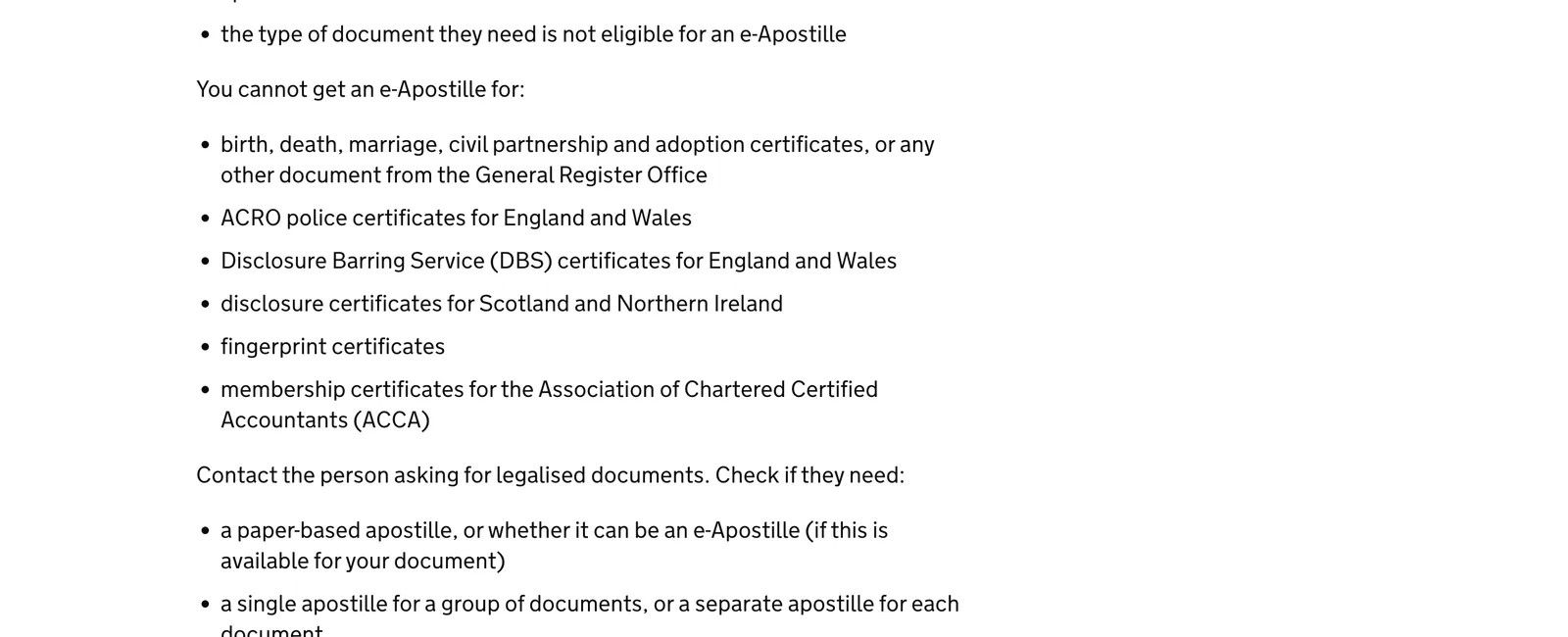
London asks UK applicants for the ACRO certificate. ACRO police certificates for England and Wales are on the FCDO’s list of documents that cannot get an e-Apostille, and a standard paper apostille costs £45 plus courier or postage. If your records are Scottish, the process is different.
Canada
At the Montreal consulate only the RCMP certificate with your fingerprints is admitted, not a certificate from a local police station. It carries a Hague Apostille from Global Affairs Canada and a Spanish translation.
Australia and India
Both are in the apostille table above. Your consulate’s page names the certificate it wants from each country.
The order to work in
- List the countries where you lived during the last five years.
- Read your consulate’s page and note the years it counts and the certificate’s age limit.
- Order each certificate from the office your consulate names.
- Get the Hague apostille and leave the staples and seals in place.
- Translate the certificate as your consulate asks.
- File it with the visa application.
What if you have a record, or your country will not issue a certificate?
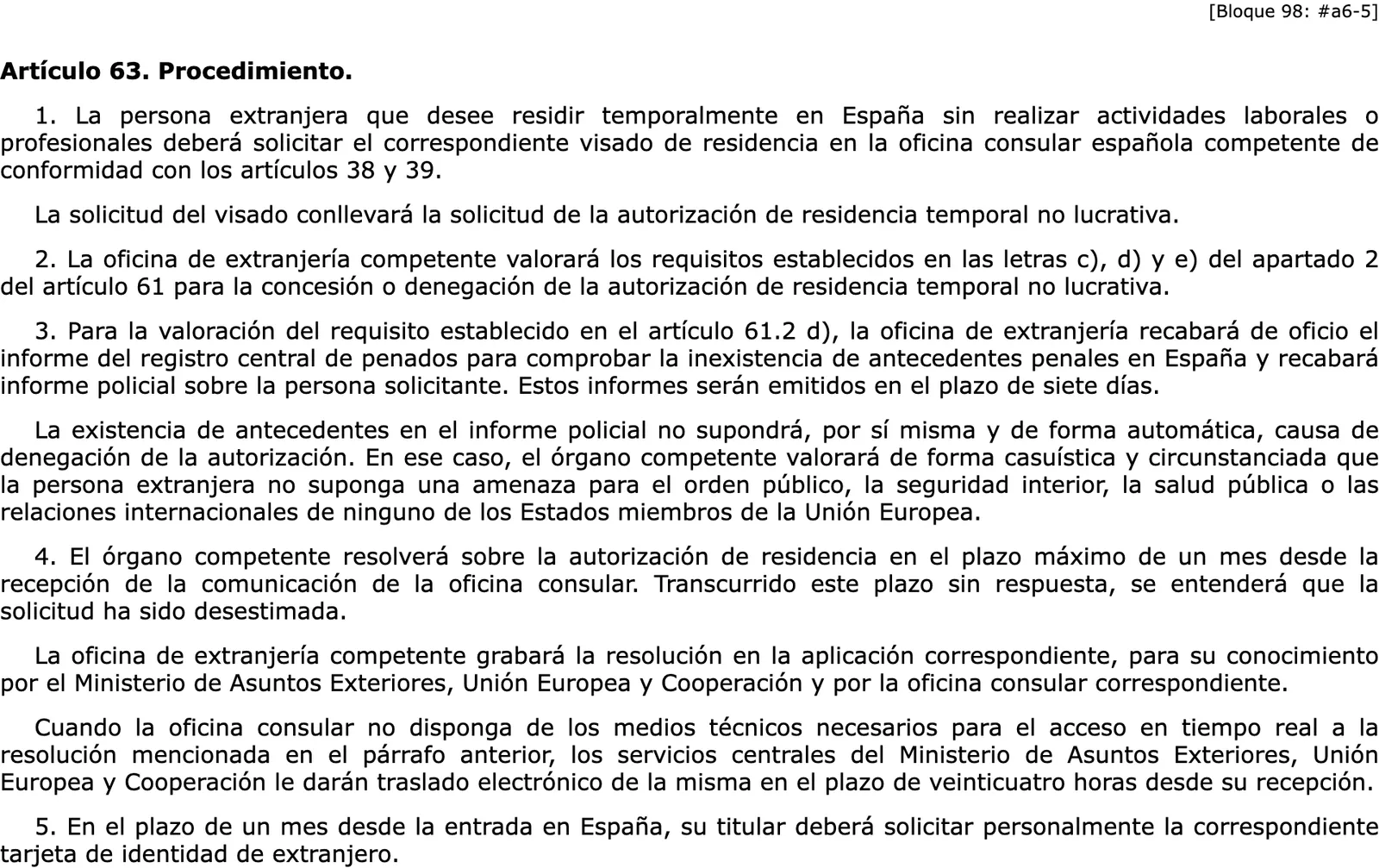
A record in the police report is not, by itself and automatically, a reason to refuse the non-lucrative permit.
La existencia de antecedentes en el informe policial no supondrá, por sí misma y de forma automática, causa de denegación de la autorización.
The existence of records in the police report will not, by itself and automatically, be a ground for refusing the authorisation.
BOE · Real Decreto 1155/2024, art. 63.3
Spain runs its own check as well: the immigration office (Oficina de Extranjería) requests the report of the central criminal register (Registro Central de Penados) and a police report on you. The permit asks that you are not a threat to public order, public security or public health, and the office then assesses a record case by case.
If a country where you lived will not issue a certificate, ask your consulate which paper it accepts before you file. We recommend asking early, so you have the answer before your other documents age.
Step by step
- List your countries of residenceWrite down the countries where you lived during the last five years.
- Read your consulate's pageNote the years it counts and the age limit for the certificate, 6 months at London and the US pages.
- Order each certificateOrder the certificate your consulate names: FBI for the US, ACRO for the UK, RCMP with fingerprints for Canada.
- Get the apostilleGet the Hague apostille and leave the staples and seals in place.
- Translate into SpanishTranslate the certificate as your consulate asks, by a sworn or certified translator.
- File with the visa applicationHand the certificate in with the application.
Not confirmed: What replaces a certificate when a country where you lived will not issue one: the visa texts read name no substitute, so ask the consulate that takes your file before you apply. Whether your consulate counts two or five years for a digital nomad file. Age limits at consulates other than the US pages and London.
Common questions
Do I also need a certificate from Spain?
For the non-lucrative permit you do not order it yourself: the immigration office requests the report of the central criminal register and a police report on you.
Is a state or local police certificate enough in the US?
No. The US consulate does not admit state certificates, and local State background checks are not valid at the Houston consulate.
Can I use an apostilled certificate that is older than 6 months?
The US pages and London ask for 6 months at most, and London accepts an older certificate only if it states a longer validity itself. The apostille does not extend a validity period the document has.
Do I need a signed declaration as well?
For the digital nomad route the national law asks for a responsible declaration of no criminal record for the last five years, and both the London and Houston pages ask for it.
Who issues the apostille for a Canadian certificate?
At the Montreal consulate the apostille comes from Global Affairs Canada, and the certificate is translated into Spanish.
Are Australia and India part of the apostille system?
Yes, both appear in the Hague Conference table as parties, Australia since 1995 and India since 2005.
Read next
Sources and reader comments
Official legal texts (BOE, DOGV, government portals):
- BOE consolidated text: Real Decreto 1155/2024, de 19 de noviembre, Reglamento de la Ley Orgánica 4/2000 (arts. 38, 39, 61, 63; last update 22/09/2026) (opens in a new tab)
- BOE consolidated text: Ley 14/2013, de 27 de septiembre, de apoyo a los emprendedores y su internacionalización (art. 62; last update 09/04/2025) (opens in a new tab)
- Consulado de España (EE. UU.) (exteriores.gob.es): Visados Nacionales - Visado de residencia no lucrativa. Consulate-specific page (opens in a new tab)
- Consulate General of Spain in London (exteriores.gob.es): Digital Nomad Visa (page dated 17 May 2024). Consulate-specific page (opens in a new tab)
- Ministerio de Inclusión, DG de Gestión Migratoria: Solicitudes iniciales de autorización para teletrabajadores de carácter internacional (PDF, undated; archived copy) (opens in a new tab)
Show 6 more sources
- Consulate General of Spain in Houston (exteriores.gob.es): Telework Visa (Digital Nomad Visa), page dated 30 June 2025. Consulate-specific page (opens in a new tab)
- Ministerio de Asuntos Exteriores, Unión Europea y Cooperación: Legalización diplomática (legalizaciones y apostilla) (opens in a new tab)
- Consulado General de España en Montreal (exteriores.gob.es): Visados Nacionales - Visado de residencia no lucrativa. Consulate-specific page (opens in a new tab)
- HCCH: Status table, Convention of 5 October 1961 Abolishing the Requirement of Legalisation for Foreign Public Documents (last update shown 30-VI-2026) (opens in a new tab)
- GOV.UK (FCDO Legalisation Office): Get your document legalised (opens in a new tab)
- GOV.UK: Get a copy of your police records (opens in a new tab)
General information checked against the sources listed above, not legal advice for your situation. Rules and office practice change; confirm with the immigration office or a licensed adviser before you act. See how guides are checked.
Spotted an error? Report it.
Comments (0)
Be the first to ask about this topic.