Spain Student Visa for a Spanish Course: Rules (2026)
A Spanish course qualifies for a study visa if taught in person at an official language school or Instituto Cervantes-accredited centre, and not if Spanish is your mother tongue or an official language of your country. Show 100% of the IPREM, €600 a month, unless your accommodation is prepaid for the whole stay, and apply at least two months ahead.
On this page
Yes, a Spanish course can get you a long-stay study visa. It has to be taught in person, at an official language school or an Instituto Cervantes-accredited centre. It does not qualify if Spanish is your mother tongue or an official language of your country.
Does your course qualify?
A study stay of up to ninety days needs no study visa, though your nationality may require a short-stay visa. For a longer stay you need the long-stay visa.
You must be over eighteen, be admitted, and show you paid the enrolment fee, even if you pay in instalments. Check the school before you pay, because the authorisation is refused if the centre is not recognised, authorised or accredited where that is required. It must keep that status while your authorisation lasts. For schools and fees, see Spanish courses in Valencia.
Money, insurance and paperwork
You must show 100% of the IPREM for each month, which is €600 a month, unless you prove prepaid accommodation for the whole stay. The money is meant to cover your upkeep and the return journey, and amounts you spend on the course do not count. The Miami consulate reduces the amount for prepaid accommodation, so ask yours how it applies that.
- Health insurance with an insurer authorised in Spain, with benefits similar to the public basic portfolio, for the whole stay.
- A medical certificate showing no diseases with serious public health repercussions.
- A criminal record certificate for the last five years if you are an adult and the stay exceeds six months.
- A passport with a minimum validity of one year.
Foreign documents often need an apostille and a translation, and the Miami consulate asks for both. It also wants insurance from one month before the course to fifteen days after it ends, and a medical certificate valid for three months.
How to apply from outside Spain
- File the visa application in person, or through a representative, at your Spanish consulate. It carries the application for your initial stay authorisation.
- File at least two months before the course starts, unless justified causes prevent it.
- Pay the visa fee: the national long-stay visa (type D) costs 90 euros. The Miami consulate notes that reciprocity fees can apply to some nationalities.
- The stay authorisation is decided within seven days, and silence counts as a refusal. If it is favourable, the consulate issues the visa within one month.
Applying from inside Spain works only if you already hold a residence authorisation. Higher studies and specialised health training have their own route there, and a language course is not among them. From home you pay the visa fee and no processing fee.
Working while you study
A language-course stay does not let you work automatically. An employee job needs a work authorisation, applied for by you or the employer, and only the higher-studies authorisation carries automatic work rights.
The job must fit around your course. Work is generally limited to thirty hours a week, and breaking that limit can end your stay authorisation. The work authorisation covers the region that granted your stay, plus bordering localities of another region. The fee for the initial work authorisation is €122.30.
Arrive in Valencia: get your TIE
If your stay exceeds six months, request the TIE in person at the police station within one month of entering Spain. In Valencia, the Oficina de Extranjería does not issue it. For people resident in Valencia city, the card comes from the Patraix police station, Gremis, 6.
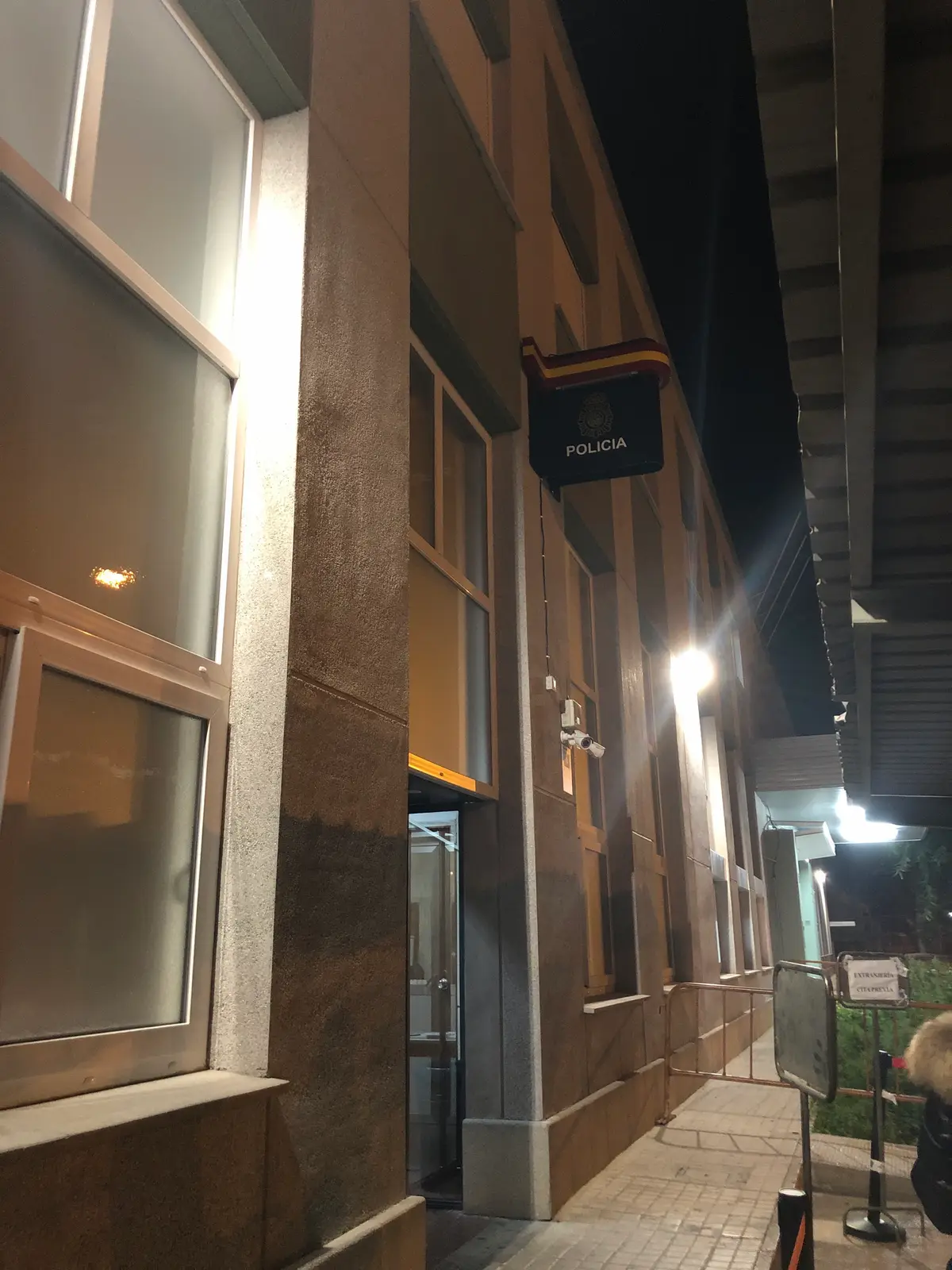
Carrer dels Gremis 6, 46014 Valencia, Spain · Open in Google Maps (opens in a new tab)
The fee and appointment are in the TIE guide. For the difference between the two numbers, see NIE vs TIE.
Extend your stay
The authorisation lasts as long as the course, up to one year. Its validity starts one month before the course.
You can request an extension in the two months before expiry, and only one is allowed. The Valencia office also accepts it in the 3 months after expiry. At an official language school, extending requires having passed the course; elsewhere it requires a DELE diploma, a DELE exam registration or a SIELE diploma. In Valencia, file electronically through Mercurio, addressed to the Oficina de Extranjería of the province. The office has one month to decide, and silence counts as a refusal.
The fee is €17.49, paid with Modelo 790, code 052. Adults must provide a criminal record certificate from their country of origin if the first authorisation was for six months or less and the extension takes the stay beyond six months.
After the course
The language course is not among the stays that switch to residence and work without a visa. Arraigo is closed while you hold a stay; see the arraigo guide. The family route in the regulation is for holders of a higher-studies authorisation. Using your stay for other purposes can lead to its withdrawal.
Photos (1)
- Nicole Qian
Step by step
- Check the course and your nationalityIn person, at an official language school or an Instituto Cervantes-accredited centre, and not in your mother tongue or an official language of your country.
- Enrol and payGet the admission and proof that you paid the enrolment fee.
- Gather your documentsPassport valid for a year, proof of means, health insurance and a medical certificate.
- File the visa at the consulateFile at least two months before the course starts.
- Apply for the TIE after arrivingIf your stay exceeds six months, request it in person at the police station within one month of entering Spain.
- Extend before it expiresFile in the two months before expiry, through Mercurio in Valencia.
Not confirmed: Your own consulate may ask for different documents and fees than the Miami consulate page used here. Confirm your school's Instituto Cervantes accreditation before you pay.
Common questions
Does a Spanish course qualify for a Spanish student visa?
Yes, if it is taught in person at an official language school or an Instituto Cervantes-accredited centre. It must not be your mother tongue or an official language of your country of nationality.
I am from Latin America. Can I get a student visa for a Spanish course?
Not if Spanish is your mother tongue or an official language of your country of nationality.
Do I need a student visa for a short course?
A study stay of up to ninety days needs no study visa, though your nationality may require a short-stay visa. A longer stay needs the long-stay visa.
How much money do I need for the visa?
Monthly 100% of the IPREM, unless you show prepaid accommodation for the whole stay. The monthly IPREM is €600. Amounts used for the course do not count.
Can I apply for the student visa from inside Spain?
Only if you already hold a residence authorisation. Otherwise file at the Spanish consulate before you travel.
Can I work on a language-course stay?
Only with a work authorisation, applied for by you or the employer. Work is generally limited to thirty hours a week.
Read next
Sources and reader comments
Official legal texts (BOE, DOGV, government portals):
- BOE consolidated text: Real Decreto 1155/2024, de 19 de noviembre, Reglamento de la Ley Orgánica 4/2000 (last update 22/09/2026 per BOE) (opens in a new tab)
- BOE consolidated text: Ley 31/2022, de 23 de diciembre, de Presupuestos Generales del Estado para el año 2023 (disposición adicional nonagésima: IPREM) (opens in a new tab)
- Consulado General de España en Miami (exteriores.gob.es): Visados Nacionales - Visado de estudios. Consulate-specific page: document lists and fees differ by consulate (opens in a new tab)
- Subdelegación del Gobierno en Valencia, Oficina de Extranjería: Folleto informativo octubre 2026 (PDF; tables updated 05/10/2026) (opens in a new tab)
- BOE consolidated text: Orden AUC/891/2024, de 13 de agosto, cuantías de las tasas por la tramitación de visados (opens in a new tab)
Show 2 more sources
- BOE consolidated text: Orden PJC/617/2025, de 13 de junio, importe de las tasas por tramitación de autorizaciones administrativas y documentos de identidad en materia de inmigración y extranjería (opens in a new tab)
- Ministerio de Política Territorial y Memoria Democrática, Subdelegación del Gobierno en Valencia: Extranjería (Oficina de Extranjería en Valencia, sedes 1 y 2; página en castellano) (opens in a new tab)
General information checked against the sources listed above. Prices, opening hours and other details change; confirm them with the provider before you act. See how guides are checked.
Spotted an error? Report it.
Comments (0)
Be the first to ask about this topic.