Digital Nomad vs Non-Lucrative Visa in Spain: Side by Side
Working remotely for a company outside Spain? The digital nomad visa allows it. The non-lucrative visa covers residence without work or professional activity. The main applicant's income test is 200% of the SMI for nomads and 400% of the IPREM for non-lucrative. Non-lucrative goes through a consulate; nomads use one too, or the UGE-CE if already in Spain lawfully.
Also in: Deutsch
On this page
Deciding between the two big long-stay options? The short version: one lets you work for a foreign company, the other does not let you work at all.
Digital nomad vs non-lucrative visa at a glance

| Digital nomad (teleworker) | Non-lucrative | |
|---|---|---|
| Who it is for | Third-country nationals of legal age working remotely, as employee or professional, for companies outside Spain | Foreigners and their family living in Spain without employment or professional activity |
| May you work? | Employee: only for companies outside Spain. Self-employed: Spanish companies up to 20% of total professional activity. Family members: no restrictions | No, for you or your family; working without authorisation is an infringement |
| Income test | Main applicant: 200% of the SMI a month. Family unit of two: at least 75% of the SMI; 25% for each extra member | Main applicant: 400% of the IPREM a month. Each dependent: 100% of the IPREM more |
| Base amount | SMI €1,221 a month in 2026 | IPREM €600 a month |
| Health insurance | Public, or private from an insurer authorised in Spain; travel, reimbursement-only, co-payment and waiting-period policies refused | Health insurance required; the Montreal consulate asks for no waiting period, co-payment or cap |
| Initial validity | Visa 1 year or shorter; then residence authorisation up to 3 years | Authorisation 1 year |
| Where you apply | Spanish consulate for the visa; already in Spain lawfully, the residence authorisation goes online to the UGE-CE | Spanish consulate; the visa application includes the authorisation |
| TIE | Not needed while on the visa; apply once an authorisation over six months is granted | Within 1 month of entering Spain |
| Renewal | Apply to stay within 60 days before the visa expires; authorisation renews in 2-year periods while conditions hold | At the Oficina de Extranjería in the 2 months before expiry; over 183 days in Spain that year; renewed for 2 years |
| Long-term residence | 5 continuous years of legal residence | 5 continuous years of legal residence |
The work rule decides it
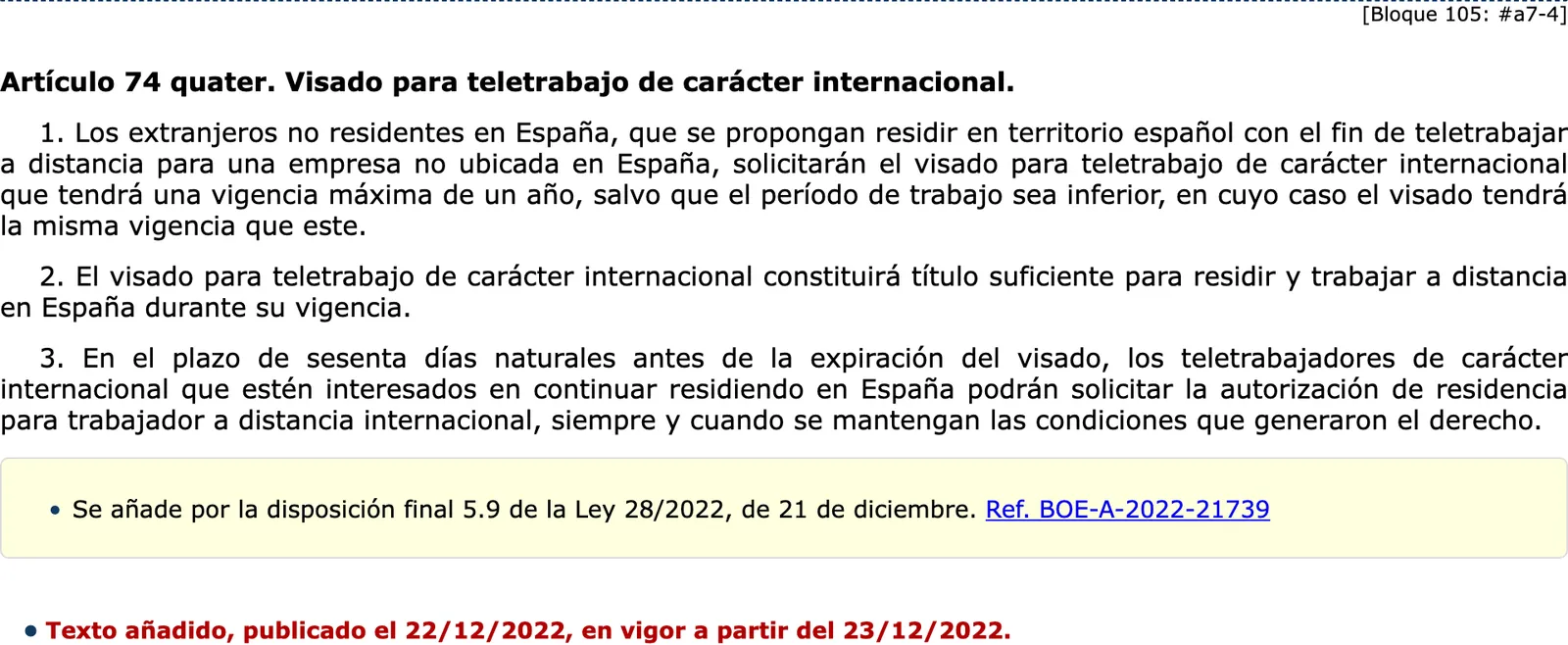
Everything else follows from one question: will you earn money while you live in Spain?
The teleworker visa is enough by itself to live and work remotely during its validity. Employees may work only for companies outside Spain. A self-employed professional may work for companies in Spain, but only up to 20% of total professional activity. Family members holding their own authorisation may work without restrictions, as employees or self-employed.
The non-lucrative permit is the opposite. It covers residence without employment or professional activity, for the holder and the family alike. Remote work done under it cannot be claimed later as a track record for a teleworker permit.
The money test in plain terms
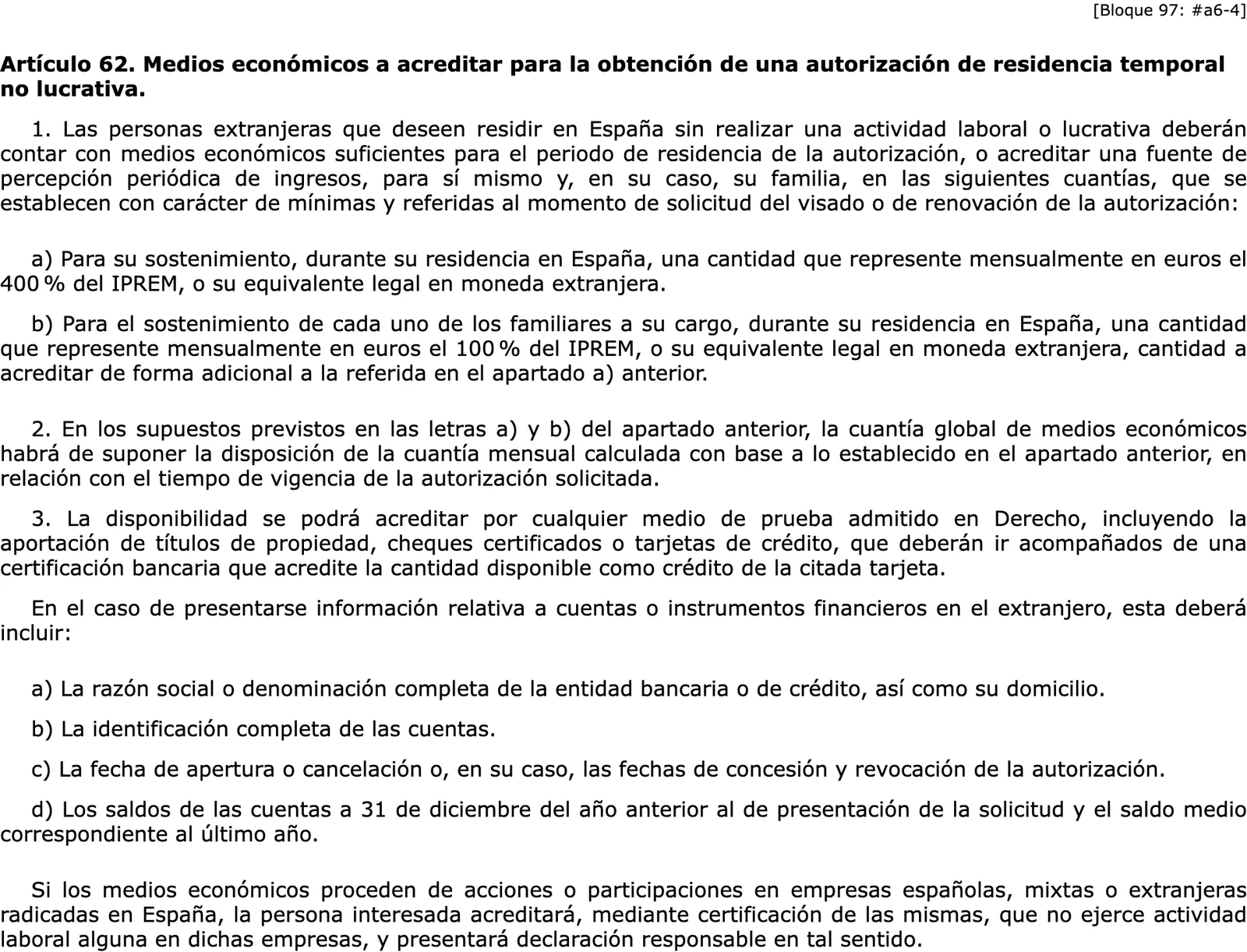
Both tests are monthly multiples of an official base. Nomads need 200% of the SMI, which is €1,221 a month in 2026. Non-lucrative applicants need 400% of the IPREM, a €600 base.
Families raise both. The nomad route asks at least 75% of the SMI for a family unit of two and 25% for each extra member. The non-lucrative route adds 100% of the IPREM per dependent. Check the full document lists in the digital nomad guide and the non-lucrative guide before you add up your own number.
TIE: the rule differs by visa
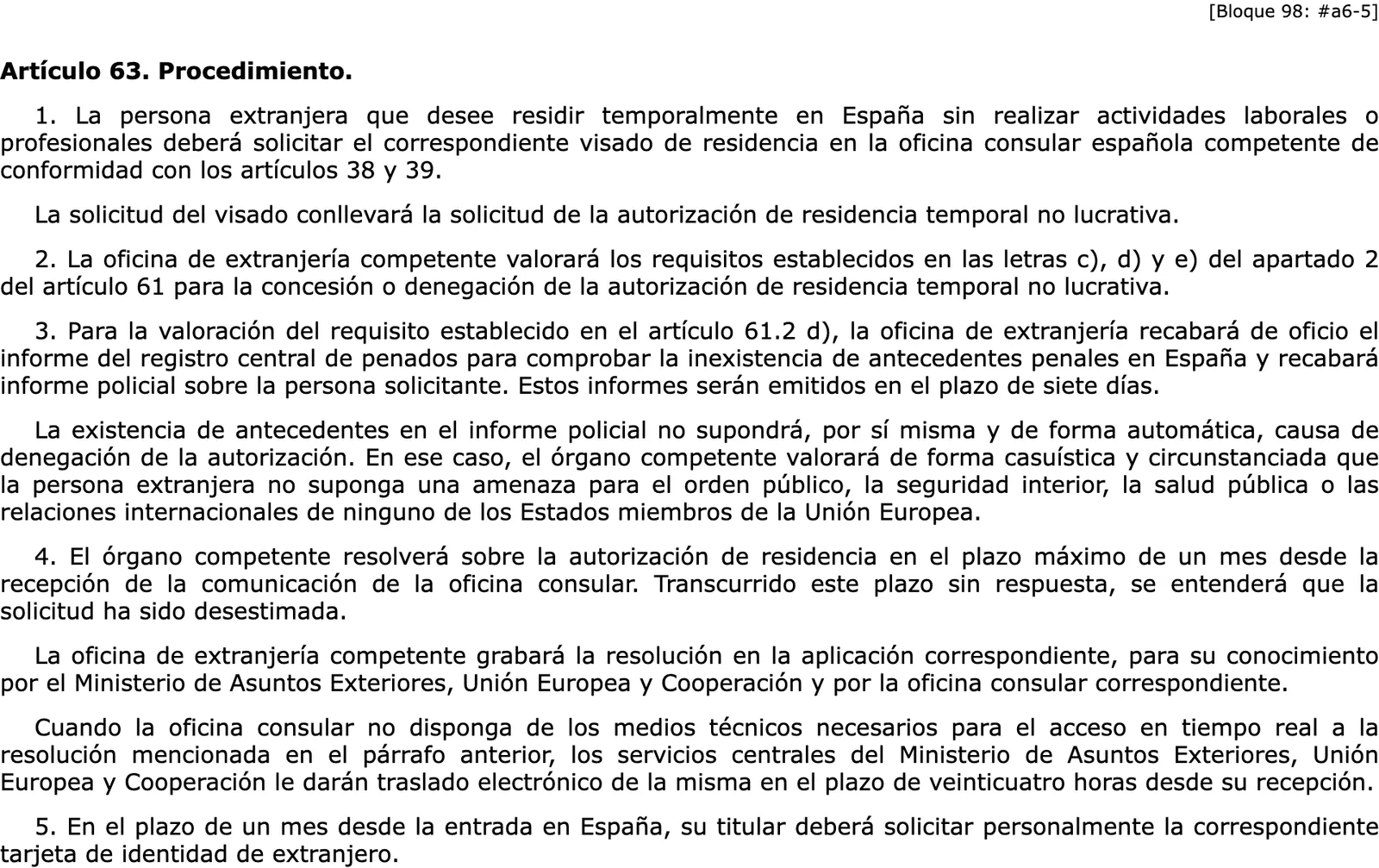
Under the general regime, a residence visa over six months leads to a TIE requested within one month of entering Spain. The non-lucrative holder follows that rule.
The teleworker visa is the exception: it authorises residence without processing a TIE. Once a residence authorisation is granted for more than six months, the holder applies for the TIE. For the card itself, see NIE vs TIE and the TIE card in Valencia.
Renewal and the road to permanent residence
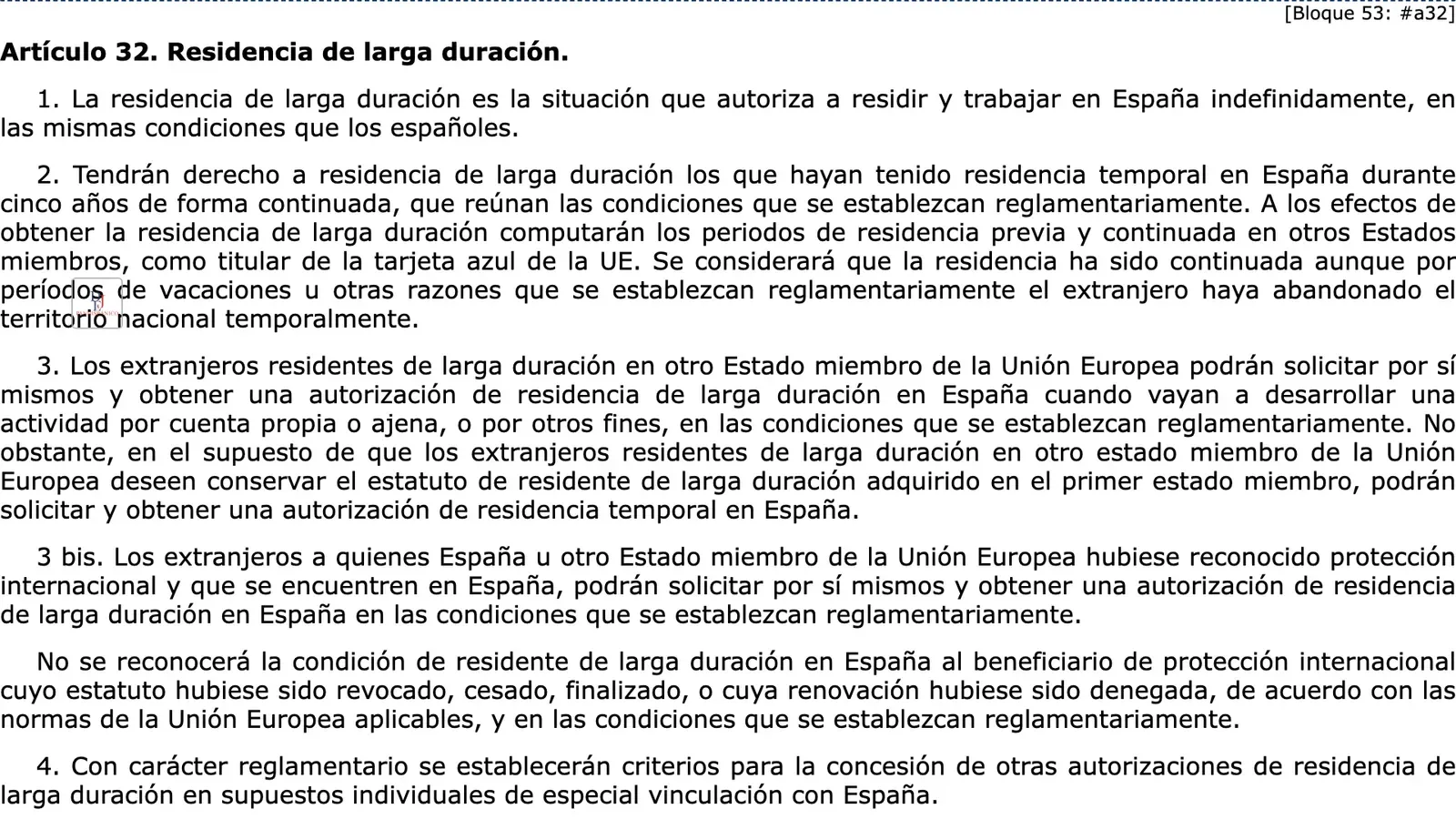
A teleworker visa holder who wants to stay applies for the residence authorisation within the sixty calendar days before the visa expires. That authorisation lasts up to three years and renews in two-year periods.
The non-lucrative authorisation lasts one year. Renewal needs more than 183 days of effective residence in the calendar year, and a renewed authorisation lasts two years.
Both are temporary residence. The national long-term authorisation needs five years of legal, continuous residence before you apply. Read from visa to permanent residency for the full path.
Photo credits
- The Ciutat de les Arts i les Ciències beside the Turia park in Valencia: Areyes108, Wikimedia Commons (opens in a new tab) (CC BY-SA 4.0)
Not confirmed: Your consulate's own document list: insurance wording and extra papers differ by consulate. Read it before you book.
Reach readers planning life in Valencia. Advertise → hello@settlevalencia.com
Common questions
Can I work remotely on the non-lucrative visa?
No. The permit covers residence without work or professional activity. Remote work done under it is not counted for a later teleworker permit, and working without authorisation is an infringement.
Which visa has the higher income test?
The non-lucrative test is a monthly 400% of the IPREM, which is a €600 base. The nomad test is a monthly 200% of the SMI, which is a €1,221 base in 2026.
Do I need a TIE on each visa?
The teleworker visa authorises residence without a TIE. A non-lucrative holder applies for the TIE within one month of entering Spain.
Do both lead to long-term residence?
Long-term residence needs five continuous years of legal residence in Spain. The same five-year test applies whichever visa you start on.
Read next
General information checked against the sources listed above, not legal advice for your situation. Rules and office practice change; confirm with the immigration office or a licensed adviser before you act. See how guides are checked.
Spotted an error? Report it.